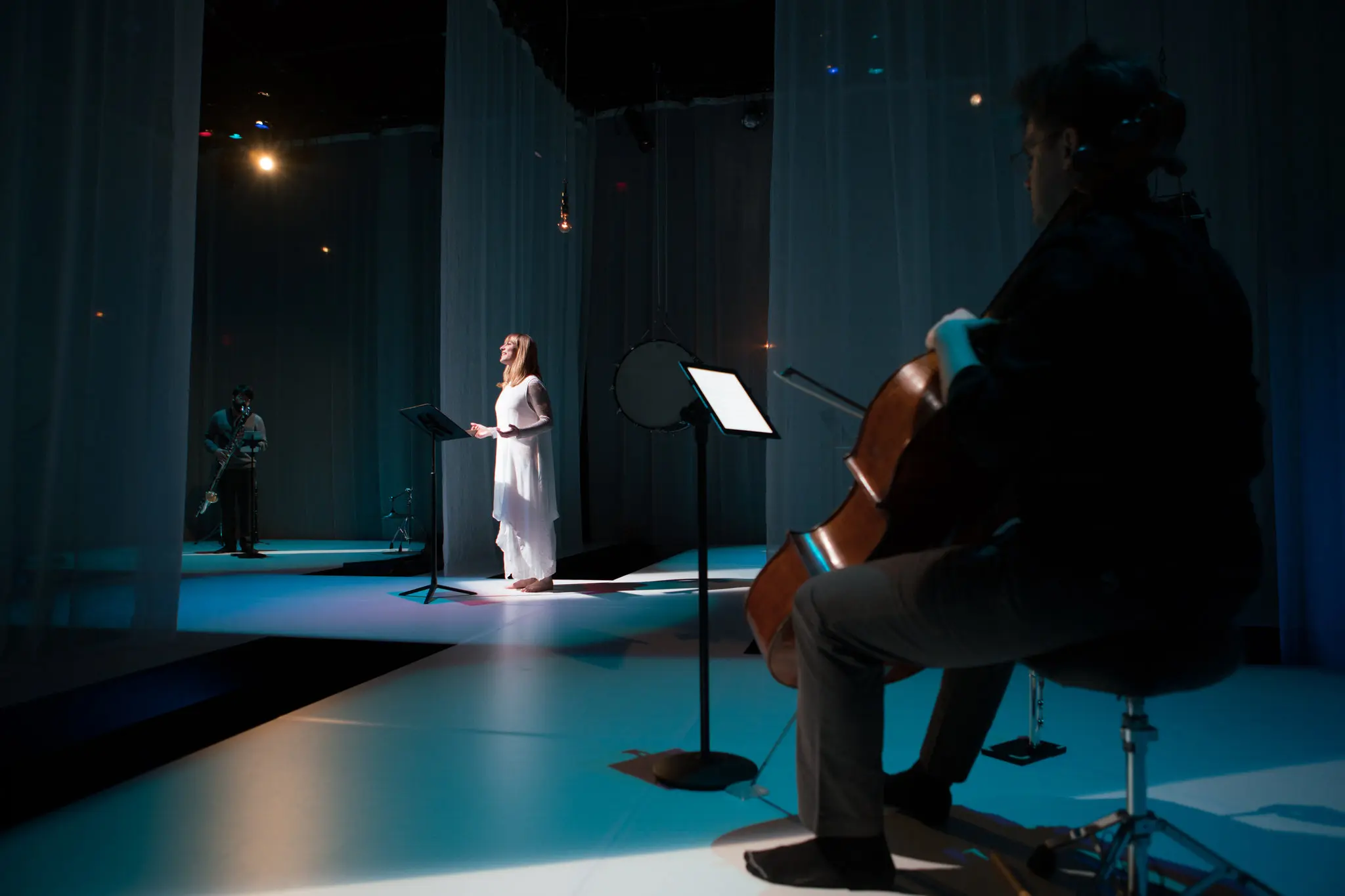
the whisper opera is performed for less than 50 people, at extremely low volume. The show’s libretto was composed with the help of Google auto-complete. You will find yourself listening closely, and unable to hear everything that’s being said.
Use this study guide to learn more about the show, plus start getting into the larger questions of intimacy, technology, and listening that the whisper opera evokes.
RELATED EVENTS
RELATED EVENTS
TRAILER
TRAILER
GET THEE TO THE LIBRARY
GET THEE TO THE LIBRARY
- Read about David Lang‘s work…
- …And more about International Contemporary Ensemble (ICE)
EXTRA CREDIT
EXTRA CREDIT
Want an insiders’ view of past Lang/ICE collaborations? Read “Like A Chained Man’s Bruise: The Mediated Body in Eight Songs for a Mad King and Anatomy Theatre“: an essay by T. Nikki Cesare, a former ICE dramaturg and performer (and NYU alum!)
- Interested in thinking about the voice? Read “Che Bella Voce!“, the introduction to Mladen Dolar’s influential A Voice and Nothing More
- Want to think more about liveness and listening in theatrical spaces? Read Jean Graham-Jones’ “Editorial Comment: Hearing Theatre,” an introduction to a collection of essays on listening
- NYU is conducting a study based on noise pollution, called SONYC: read about it in the New York Times
- Take a walk and hear Washington Square Park differently with the Holladay Brothers‘ site-specific composition, commissioned by NYU Skirball and available on your smartphone