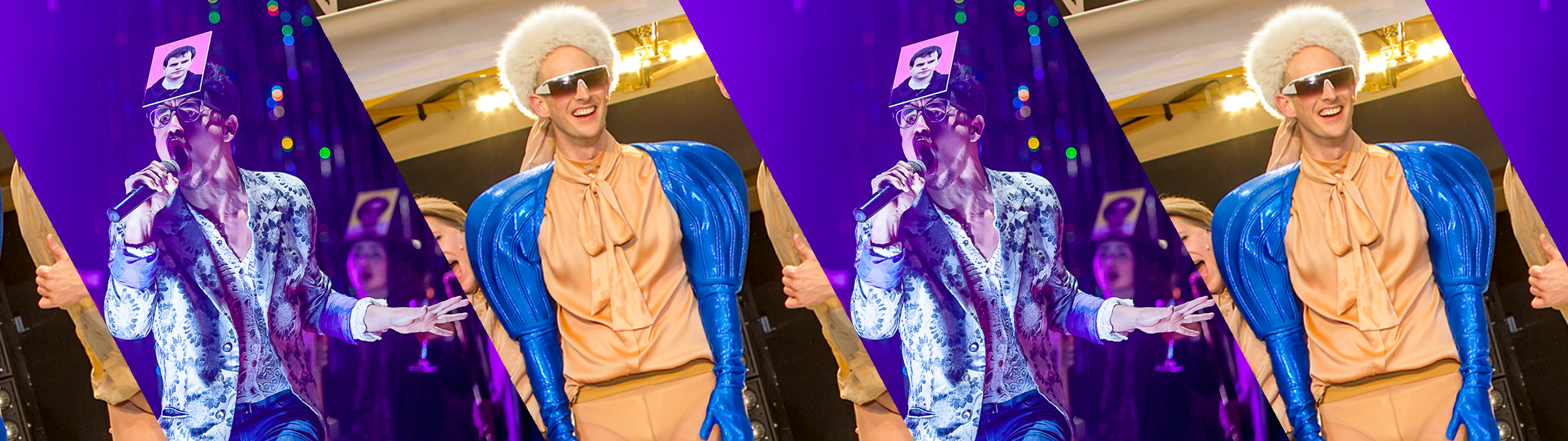
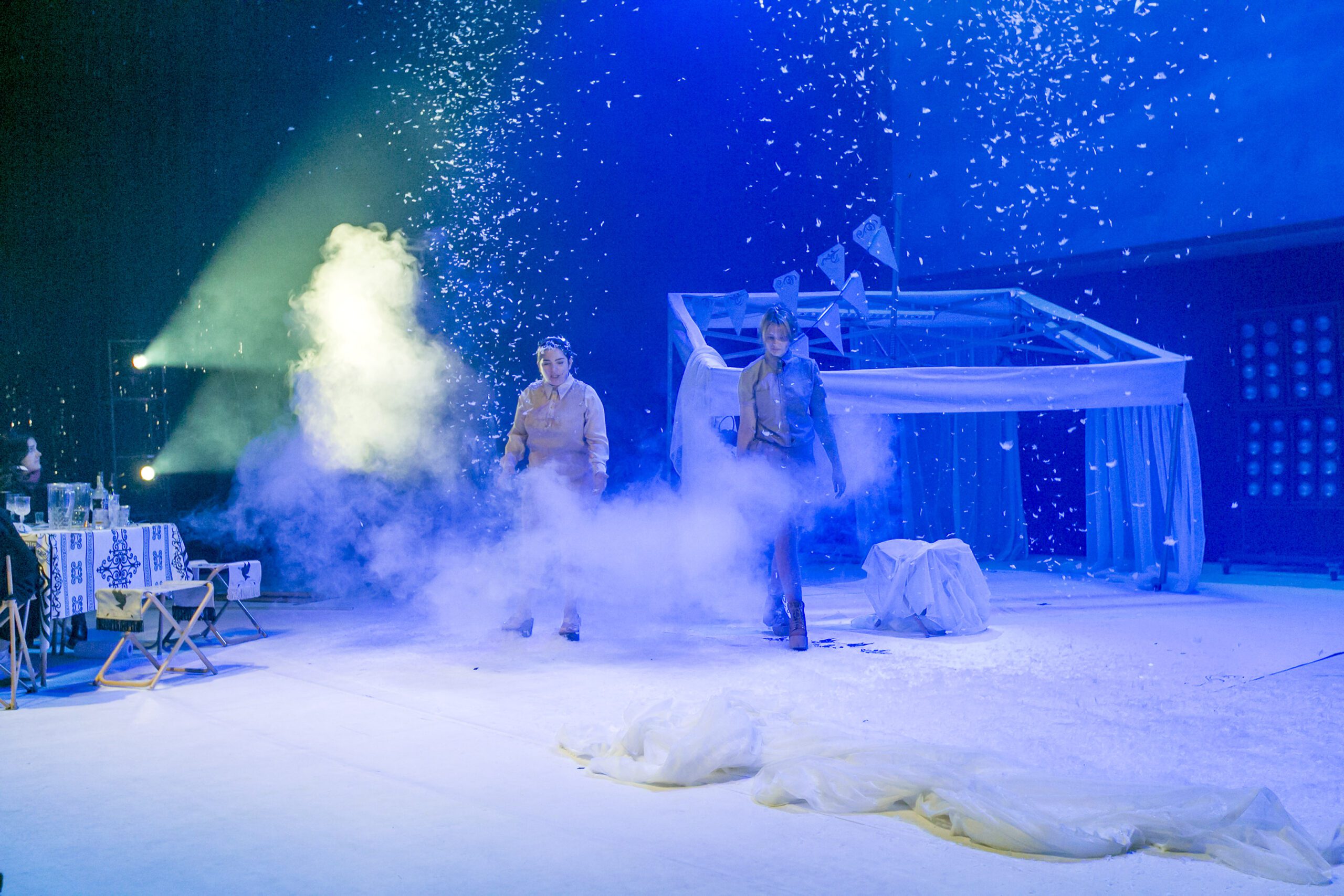
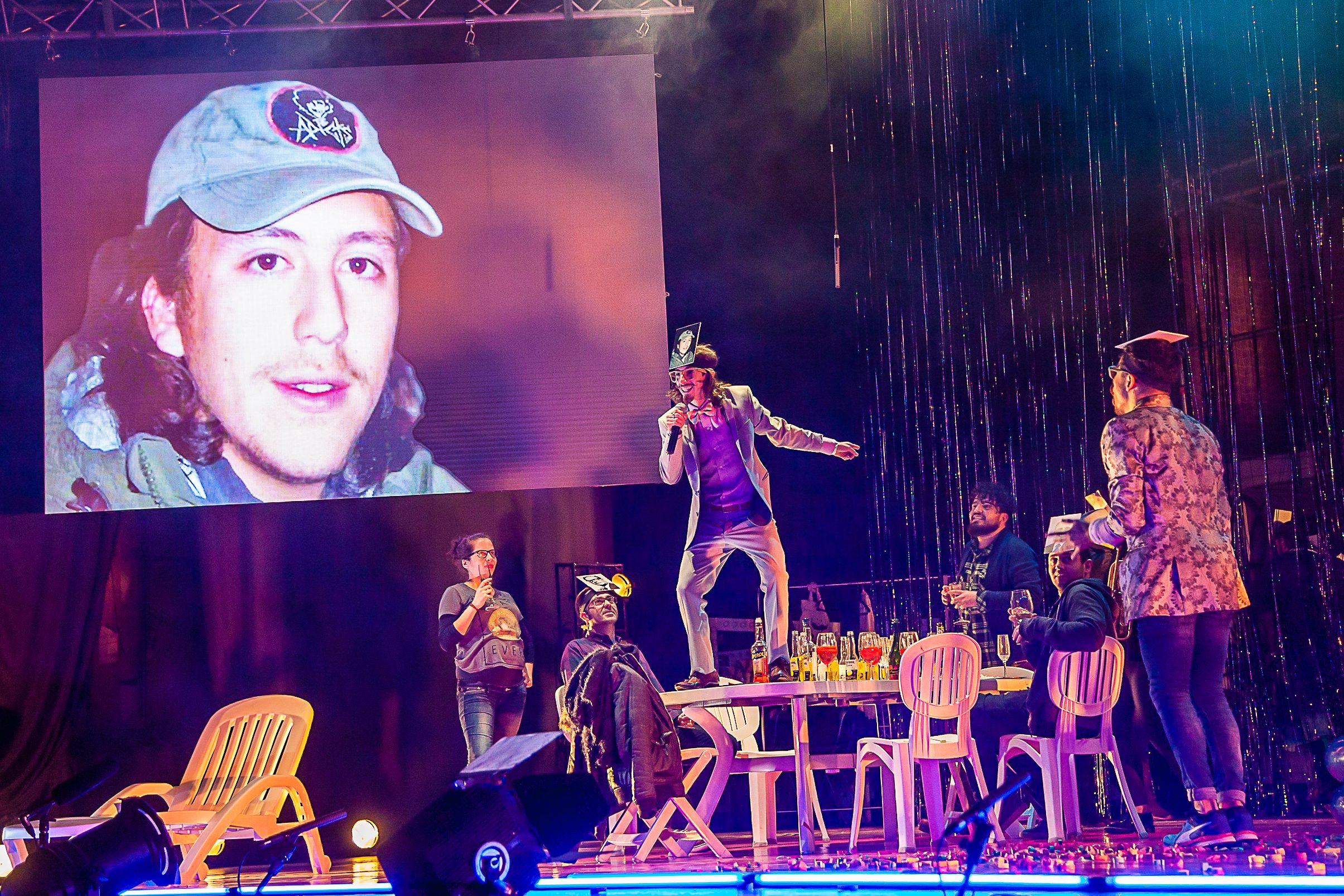
NYU Skirball is bringing you two international — and internationally renowned — theatre companies, with back-to-back adaptation-slash-translations of classic texts in entirely different contexts. Gob Squad takes on War and Peace and Teatro La Re-Sentida gives Molière’s The Misanthrope a contemporary spin with La Dictadura de lo Cool (The Dictatorship of Coolness).
Not familiar with these classics? No problem. The artists will get you up to speed when you see the shows — no prior knowledge necessary (although if you’re already an expert, there’s going to be plenty of new delights for you to discover). This study guide gives you some ways to think about translation, adaptation, the sanctity of “originals,” and the resonance of old stories in new contexts, plus some background on Tolstoy and Molière for good measure.
RELATED EVENTS
RELATED EVENTS


GET INTO IT
GET INTO IT


WAR & PEACE
WAR & PEACE
The Guardian put this cheat sheet together in advance of a BBC adaptation: “War and Peace: The 10 Things to Know (If You Actually Haven’t Read It)”
“Why Read War and Peace?”: If you’ve never attempted it, let University of Chicago professor William Nickell tell you why it’s worth your time.
There remains the greatest of all novelists — for what else can we call the author of War and Peace? Shall we find Tolstoi, too, alien, difficult, a foreigner? Is there some oddity in his angle of vision which, at any rate until we have become disciples and so lost our bearings, keeps us at arm’s length in suspicion and bewilderment? From his first words we can be sure of one thing at any rate — here is a man who sees what we see, who proceeds, too, as we are accustomed to proceed, not from the inside outwards, but from the outside inwards.
War and Peace is widely regarded as one of the greatest novels of all time… but there’s always room for debate. What’s your pitch for Gob Squad’s next epic adaptation?
PLUS: Everything you ever wanted to know about Gob Squad in their FAQ Videos.
El Misántropo
El Misántropo
Michael Billington, The Guardian‘s theatre critic, ranks The Misanthrope at #23 of the greatest plays of all time.
“Notes on The Misanthrope” by Pannill Camp, director of a 2015 production at Washington University in St. Louis
Molière on Stage: What’s So Funny? Chapter 10: “Not!” Robert Goldsby (2012)
Adam Gopnik eulogizes Molière’s great translator Richard Wilbur while also using The Misanthrope to read contemporary French politics: “Thinking of Richard Wilbur and Molière While Listening to Emmanuel Macron”: The New Yorker, Oct 18, 2017
Can’t get enough Molière? Ariane Mnouchkine and Le Théâtre du Soleil made an epic film about him in 1978: Molière, ou la vie d’un honnête homme
On Translation (Or Not)
On Translation (Or Not)
Let’s get classic: Walter Benjamin’s “La Tâche du Traducteur” (1923):
- “The Translator’s Task,” translated by Steven Rendall (1997)
- “The Task of the Translator,” translated by Harry Zohn (1968)
“The Politics of Translation,” Gayatri Chakravorty Spivak (1993)
“Translation as Paradigm for Human Sciences,” Barbara Cassin (2016)
The Translation Studies Reader, ed. Lawrence Venuti (2000)
And for the contrarians: read an excerpt from The Dictionary of Untranslateables: A Philosophical Lexicon (2014)
On ADAPTATION
On ADAPTATION
Adaptations can be seen as ways to uncover different meanings that may not be clearly revealed in the orginal stories. They can also be a way to explore the subjectivity of stories we have only been shown in one way.
Explore these readings to uncover more on the uses of adaptation in theatre.
“Telling the Tale: Adaptation as Interpretation” by Robert Gordon and Olaf Jubin (2015)
“Adaptation, the Genre” by Thomas Leitch (2008)
“Beyond Fidelity: The Dialogics of Adaptation” by Robert Stam (2000)
On MULTIMEDIA
On MULTIMEDIA
Both companies use multimedia and immersive or participatory strategies in their works. Get up to speed on these styles:
“Antagonism and Relational Aesthetics” by Claire Bishop (2004)
Artificial Hells: Participatory Art and the Politics of Spectatorship by Claire Bishop (2012) [bonus: an article on the many languages of its translations]
“Reality Enchanted, Contact Mediated: A Story of Gob Squad” by Nina Tecklenburg and Benjamin Carter (2012)
“The Spectatorial Body in Multimedia Performance” by Jennifer Parker-Starbuck (2011)
“Live Media: Interactive Technology and Theatre” by David Z. Saltz (2001)
“In Media Res: Why Multimedia Performance?” with Eric Dyer, Brooke O’Harra, Alex Timbers in conversation with Steve Luber
EXTRA CREDIT
EXTRA CREDIT
The Best Translated Book Award is an American literary award that recognizes the previous year’s best original translation into English, one book of poetry and one of fiction. It was inaugurated in 2008 and is conferred by Three Percent, the online literary magazine of Open Letter Books, which is the book translation press of the University of Rochester.
FICTION
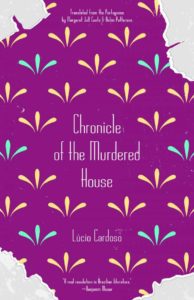
Chronicle of the Murdered House, by Lúcio Cardoso
Translated from the Portuguese by Margaret Jull Costa and Robin Patterson
POETRY
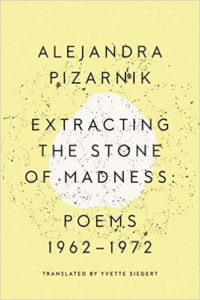
Extracting the Stone of Madness, by Alejandra Pizarnik
Translated from the Spanish by Yvette Siegert