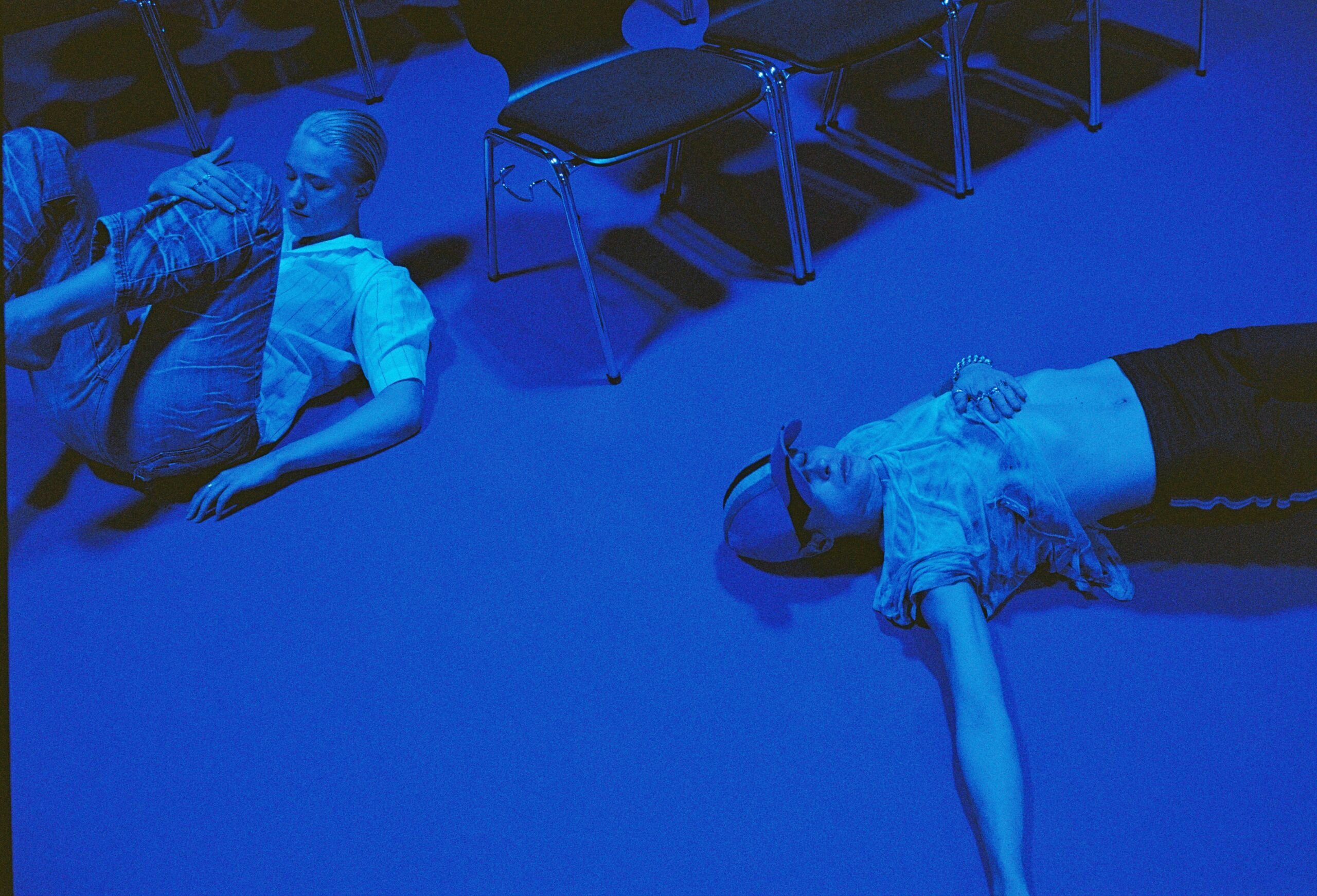
William Gass’s ribald essay ‘On Being Blue’ makes thinking about color an inherently amorous discourse, pairing the act of seeing with notions of the lover and the beloved. Side-stepping problems of first causes, the act of perception is formulated as a commingling, and blue becomes a place of indeterminacy, an enabler of metaphorical possibility.
Named colors are abstractions. They emerge from things we see, and over time the words drift away from the things they describe. In English blue is often seen as a darker color; it emerges from the night side of things, and painters use it in the space of shadow, almost always counter to the illuminated side of an object.
Blue often disappears into other colors, easily into a grey, and on the dappled side of green. When we observe the loss of illumination in an ambient space, blue takes the place of the brighter side of the spectrum. In the metaphors joining color to temperature, blue is often described as a cool color for this reason. But blue can also be seen as hot: the blue flame of the gas stove belies one metaphor for another. Color’s contradictions presented in lived experience keep metaphor’s fragility ever-present and moving. Blue sits fluctuating in our experience as a continual site for poetry.
Jesse Bransford is Clinical Professor of Visual Arts in NYU Steinhardt’s Department of Art and Art Professions.
- Thu Oct 1 – Fri Oct 2, 2026
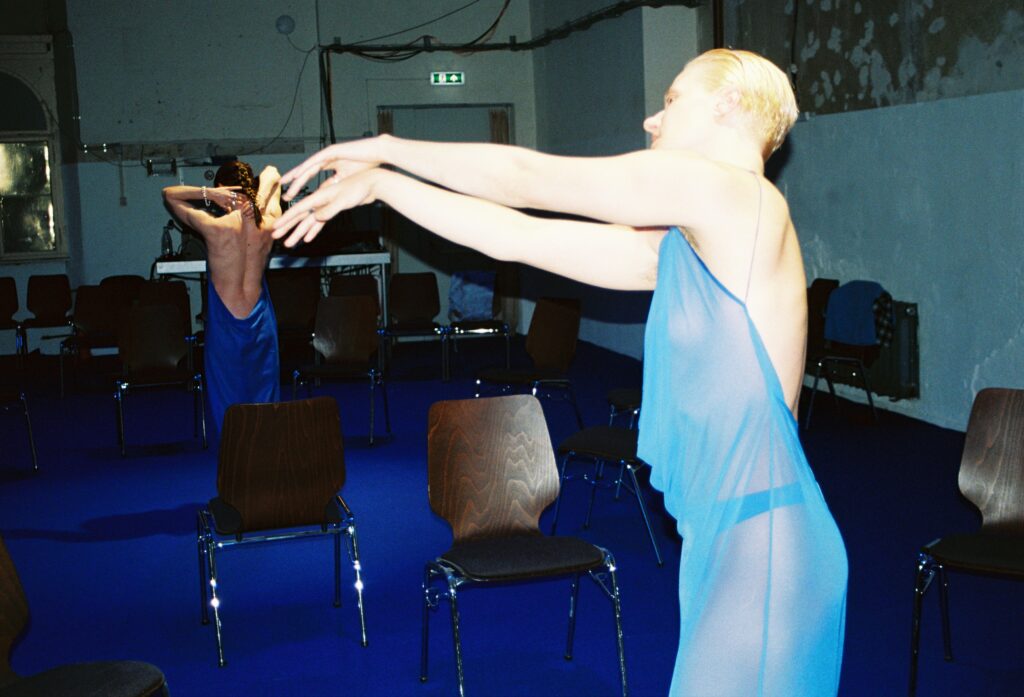
Ewa Dziarnowska: This resting, patience
Sit inside the dance.
- Dance
- International
- US Premiere