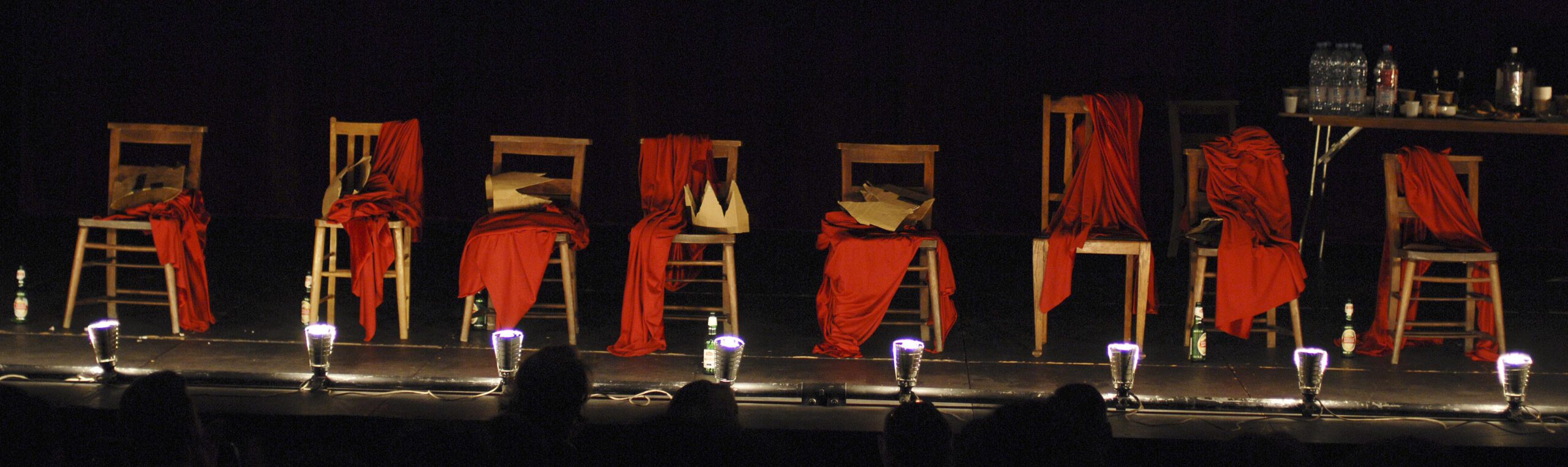
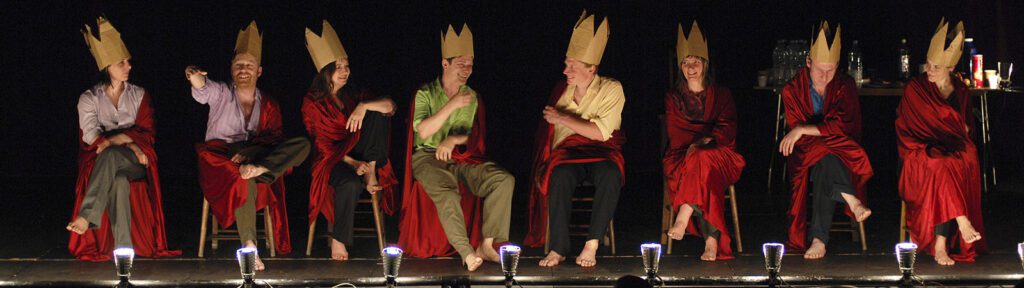
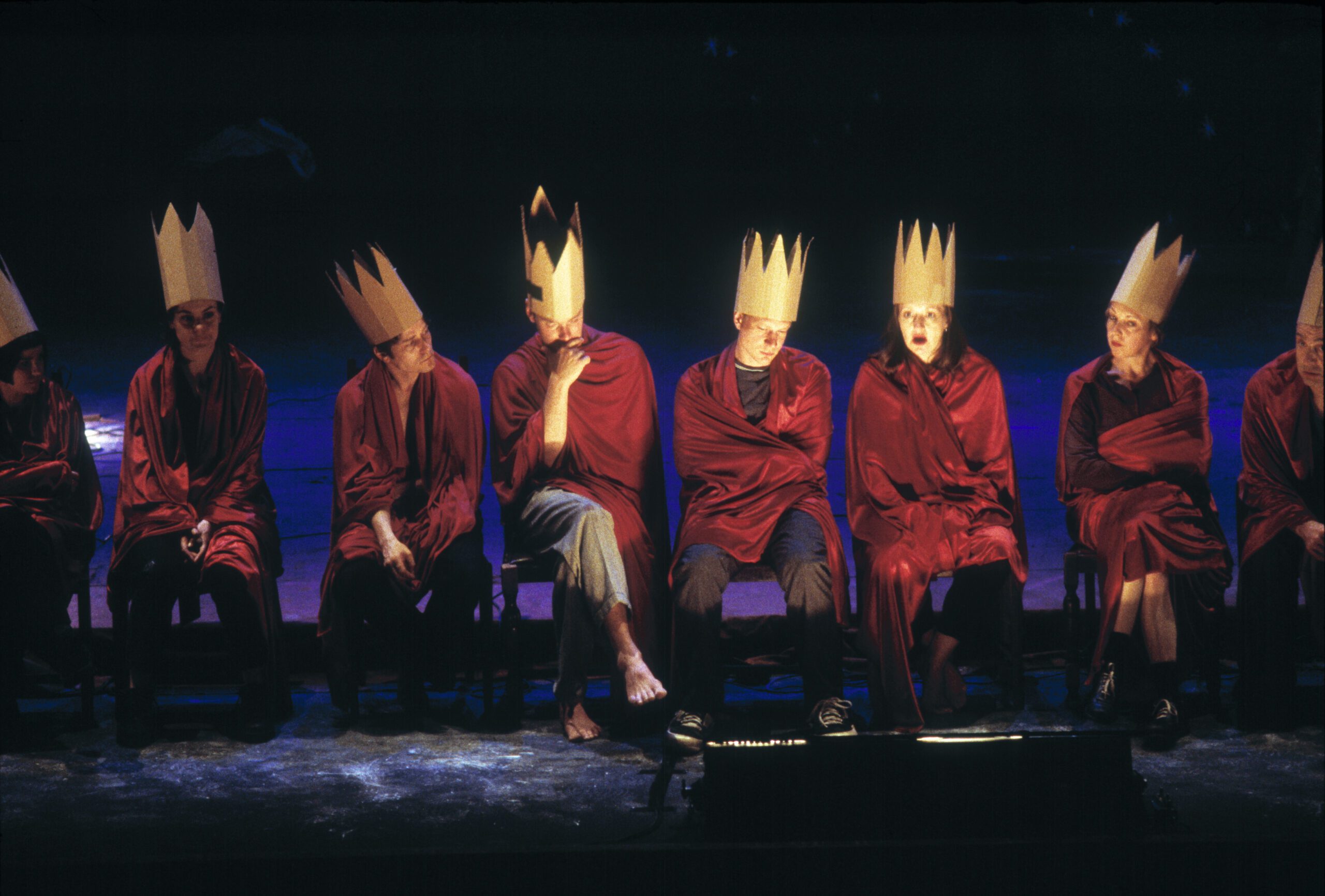
UK-based theatre company Forced Entertainment has been working collaboratively for 30+ years. Their website is a great and comprehensive resource: learn more about the company’s process, their history, and this show.
Read more about the work from Forced Entertainment artistic director Tim Etchells:
Wondering now about how these simple rule-based performance pieces are so hard to describe. I guess it’s something about the balance between the explicit rules and the ones which are more implicit/unspoken; ‘rules’ created in fact by having a shared sensibility and frame of references. I guess this kind of shared knowledge is really important to a work like And on the Thousandth Night…
And get up to speed on the source inspiration: The Thousand and One Nights.
King Shahryar, after discovering that during his absences his wife has been regularly unfaithful, kills her and those with whom she has betrayed him. Then, loathing all womankind, he marries and kills a new wife each day until no more candidates can be found. His vizier, however, has two daughters, Shahrazad (Scheherazade) and Dunyazad; and the elder, Shahrazad, having devised a scheme to save herself and others, insists that her father give her in marriage to the king. Each evening she tells a story, leaving it incomplete and promising to finish it the following night. The stories are so entertaining, and the king so eager to hear the end, that he puts off her execution from day to day and finally abandons his cruel plan.
RELATED EVENTS
RELATED EVENTS
GET INTO IT
GET INTO IT


GET THEE TO THE LIBRARY
GET THEE TO THE LIBRARY
- Sara Jane Bailes. Performance Theatre and the Poetics of Failure: Forced Entertainment, Goat Island, Elevator Repair Service. Routledge, 2011. [preview]
- Tim Etchells. Certain Fragments. Routledge, 1999. [more info]
- Tim Etchells. “On Performance: Improv Storytelling’s Peculiar Joy.” The Guardian. 13 April 2010. [link]
- Jacques Rancière. The Emancipated Spectator. Verso, 2009. [more info]
- Jordan Tanahill. “Why Live? A Question for 21st Century Theatre.” World Literature Today, Vol. 90, No. 1. [link]
OFFICE HOURS
OFFICE HOURS
Cathy Naden and Sebastián Calderón Bentin
READ ALL ABOUT IT
READ ALL ABOUT IT
Their Latest Risk: Household Objects Playing Shakespeare
There are no small parts. There are some very small actors. In “Complete Works: Table Top Shakespeare,” which starts on Sept. 11 at N.Y.U. Skirball, the blazingly inventive English company Forced Entertainment will whiz through 36 Shakespeare plays. (Sorry, “Henry VIII.”) Each play is a solo show, abetted by armloads of household objects: cups, cans, kitchen twine, wood glue, gin. Juliet is a jar of marmalade. Hamlet is a bottle of vinegar. (Genius.)
Program Note: Liveness, Language and the Moment
Each of the long pieces Forced Entertainment have made exists, in the first place, as a simple set rules that at the same time limit, define and generate possibilities. From such a starting point and within such a frame the performers are improvising – working and playing together to create something – pushing at the edges of what’s possible inside the restrictions to hand. You hear and see the content of the work, but you also see the labour, the inventiveness and the struggle with the rules.
WHAT’s IN A STORY?
WHAT’s IN A STORY?
Meditations on storytelling in the New Yorker: “Art of Story” and “Once Upon a Time.“
Stories are graves. Empty. Nothing there. All living and dying in them fake. Pretend. No story unless someone reads, tells it. Empty. No one’s time inside a story. Time needed to live and die, to tell stories. But stories not time. Stories graves. No entering or leaving them without time. Nothing breathing inside them. Lost nor found. No time. Only stories. Only words. Pretend words. Pretend time.
Next time you’re in Tennessee, check out the National Storytelling Festival.
Plus, learn more about NYU Steinhardt’s oral storytelling project, which looks at language and narrative development via storytelling with Latinx schoolkids.
Once Upon A Time
Once Upon A Time
The same prompt, 3 ways.
“Once upon a Time,” Anthony Madrid
“Once upon a Time,” E.H. Gombrich
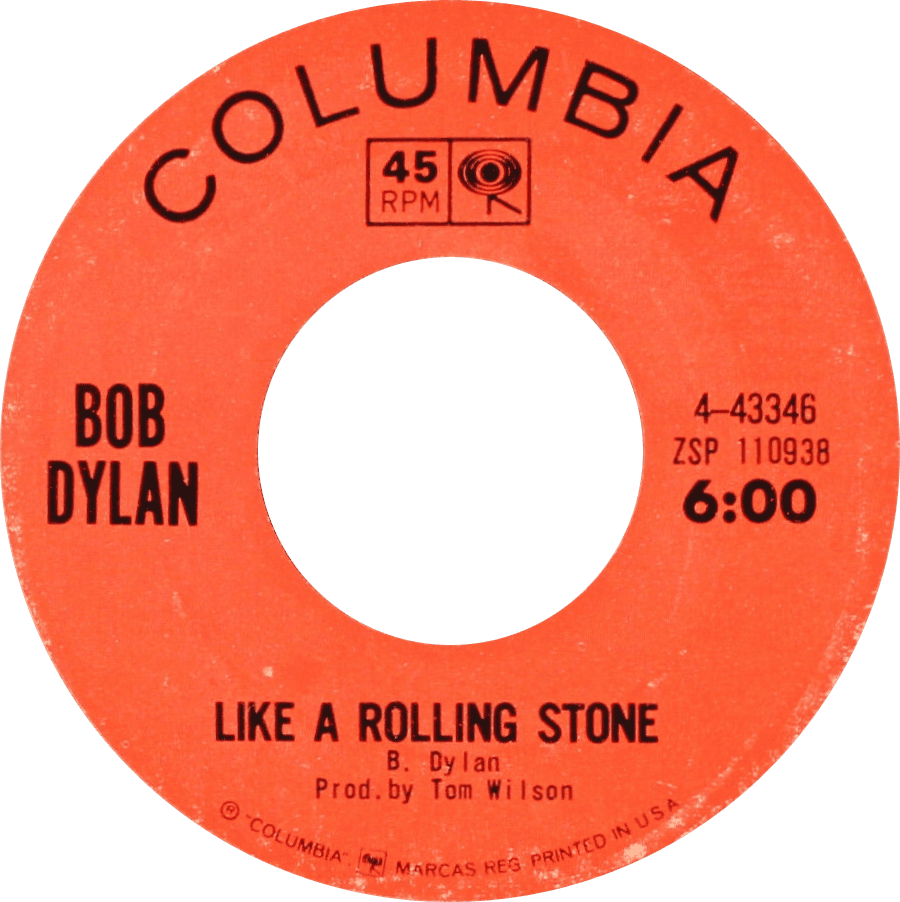
“Like a Rolling Stone,” Bob Dylan
EXTRA CREDIT
EXTRA CREDIT
Read thoughtful takes on the technique in the New Yorker and Huffington Post.
“Suspense is defined most simply as leaving someone hanging in anticipation of the next thing, and that happens a lot in good storytelling of all genres… at least since folklorists wrote the frame story featuring Scheherazade in One Thousand and One Nights (first published in English in 1706), the cliffhanger has never stopped working.”
And perhaps you’ll also enjoy Cliffhangers, an obscure, conceptual NBC show from 1979, which includes 3 separate serialized plots, ending on cliffhangers every week. Spoiler: it was canceled very quickly. You can catch the whole show here.