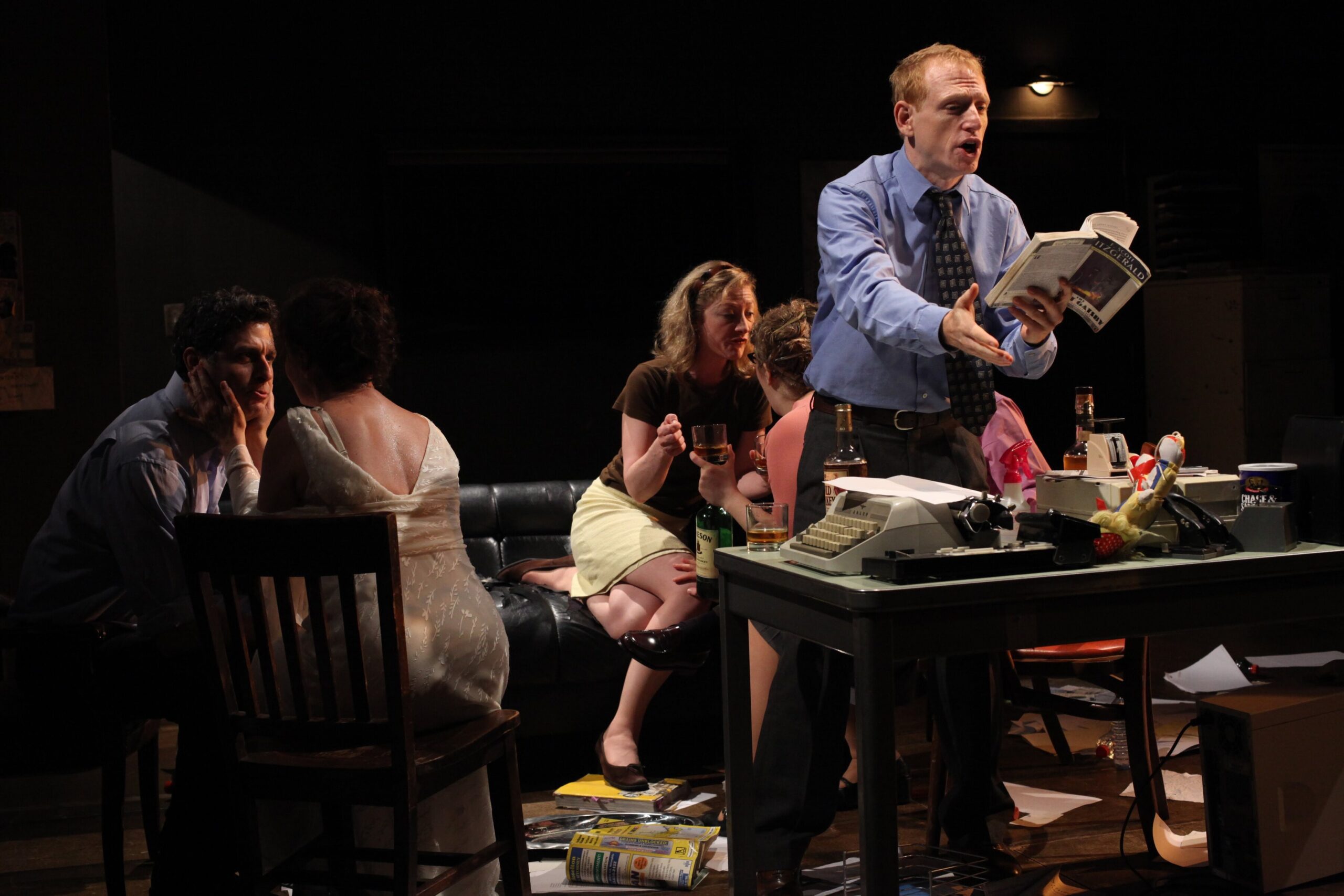
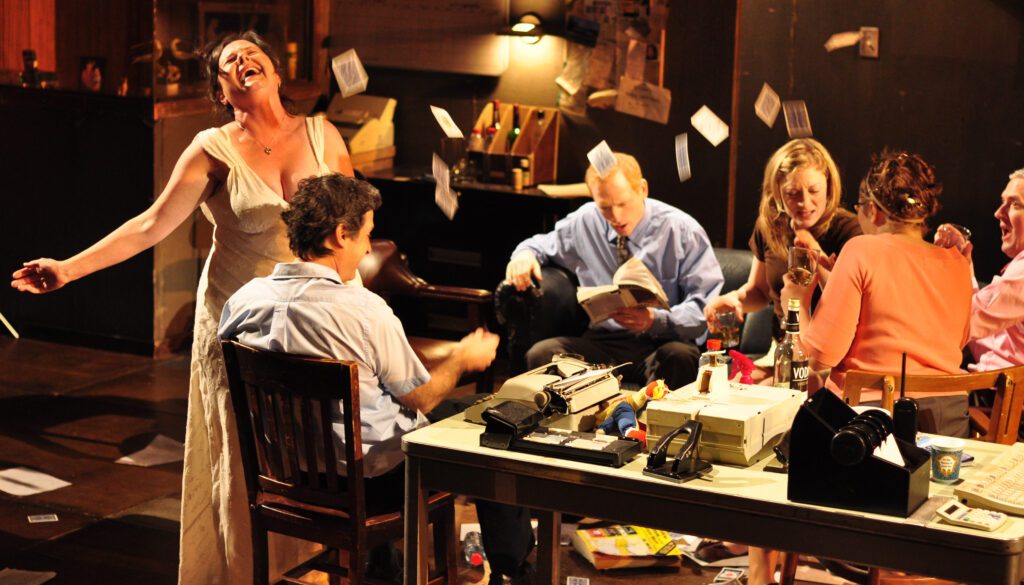
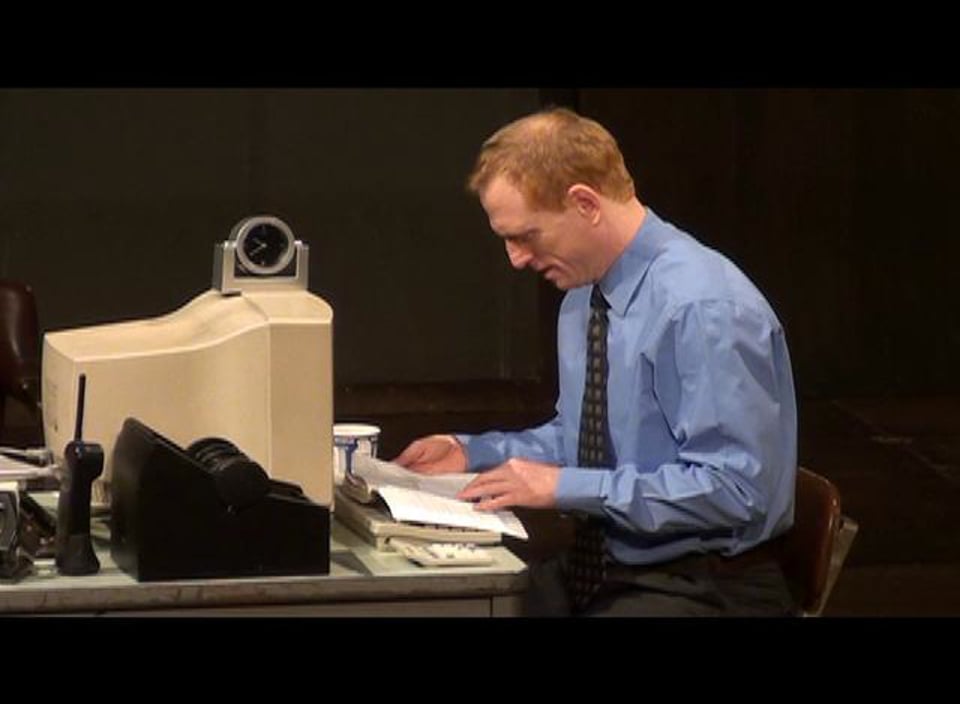
Elevator Repair Service was founded in 1991 by artistic director John Collins. Gatz is one of their most ambitious and applauded works. Their website gives a comprehensive overview of the show (including crucial timing for coffee breaks). Hear what the cast of Gatz thought of Baz Luhrmann’s film adaptation (spoiler: not long enough for their taste); read an interview with the actors; and an interview with director John Collins.
RELATED EVENTS
RELATED EVENTS
GET INTO IT
GET INTO IT

GET THEE TO THE LIBRARY
GET THEE TO THE LIBRARY
Recommended readings to accompany Julia Jarcho’s Indefinite Article.
- Sara Jane Bailes, Performance Theatre and the Poetics of Failure: Forced Entertainment, Goat Island, Elevator Repair Service. Routledge, 2011.
- John Britton, Encountering Ensemble. Bloomsbury, 2013.
- Francis Scott Fitzgerald, The Great Gatsby. Penguin Classics, 2010.
- Jozefina Komporaly, Radical Revival As Adaptation : Theatre, Politics, Society. Palgrave Macmillan, 2017.
- Katalin Trencsényi and Bernadette Cochrane, editors, New Dramaturgy: International Perspectives on Theory and Practice. Bloomsbury, 2014.
Now that you’ve heard the whole book out loud in one go… branch out! Check out this list of suggested readings for Gatsby-lovers. These titles pick up some of the themes of The Great Gatsby, and are written by authors with an eye toward a more diverse take on what it means to dream the American dream
OFFICE HOURS
OFFICE HOURS
John Collins and Rinne Groff talk “Gatz”
READ ALL ABOUT IT: IT’S A HIT!
READ ALL ABOUT IT: IT’S A HIT!
A Novel ‘Gatsby’: Stamina Required
If someone asked you, “Want to watch me read a book for the next six or seven hours?” you would probably — and wisely — decline.
Heard Any Good Books Lately, Zelda?
It’s… a dramatization of the act of reading itself — of what happens when you immerse yourself in a book.
Elevator Repair Service’s ‘Gatz’ a rewarding marathon
Fitzgerald’s writing never fails to remunerate readers with its unsurpassed style and penetrating insights into the American character.
Great American Novel: Y/N
Great American Novel: Y/N
Fitzgerald tried to make this an easy argument, putting the word “great” right there in the title. The Great Gatsby is continually lauded as indeed one of the greats, with numerous adaptations and persistent presence on syllabi and must-read lists, despite its initial dismissal by critics; the Guardian has a great rundown on its early years.
One of the reasons that most of its early readers couldn’t see Gatsby‘s greatness was because it, too, seemed merely to report on their modern world. What they couldn’t yet appreciate was that this insider’s guide to the enchantments of the jazz age was also an uncanny glimpse into the world to come.
This 75th anniversary close reading in Vanity Fair outlines its legacy and evergreen greatness:
It was nearly entitled just plain Gatsby. It remains “the great” because it confronts the defeat of youth and beauty and idealism, and finds the defeat unbearable, and then turns to face the defeat unflinchingly. With The Great Gatsby, American letters grew up.
Jesmyn Ward makes a compelling and generous case in the New York Times for re-reading The Great Gatsby, as a teacher of hard lessons:
One of the first great lessons of my adulthood was this: I change. As I grow, my dreams change, as do my ideas about who I can be and what I want during the short time I am alive. Gatsby has not learned this. It is a lesson he has closed himself to.
For contrast, here’s Kathryn Schulz on “Why I Despise The Great Gatsby“; and a great piece on the JSTOR blog about the persistent, all-American fun of picking the great American novel.
Great American Cover: Y/Y
Great American Cover: Y/Y
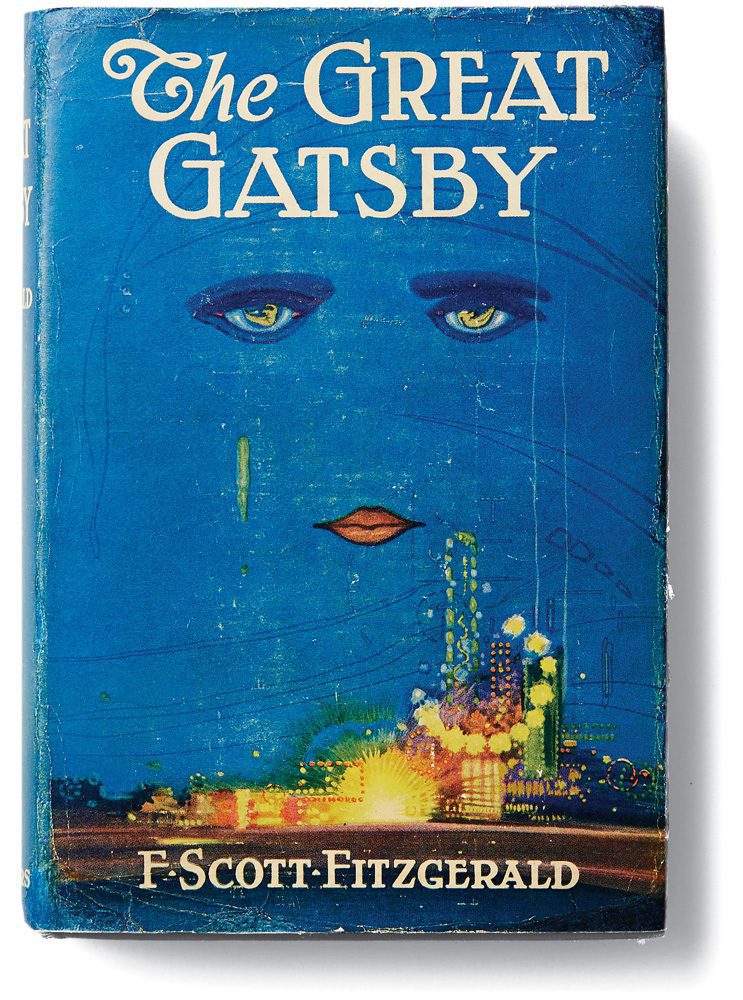
Scott Fitzgerald was reportedly so delighted by the now-famous cover of The Great Gatsby that he wrote it into the novel, as the Smithsonian reports:
In a letter to editor Max Perkins, Fitzgerald, whose manuscript was late, requested that the art be held for him. “For Christ’s sake don’t give anyone that jacket you’re saving for me,” Fitzgerald wrote, “I’ve written it into the book.” It’s not clear exactly what Fitzgerald meant by this, but it is generally believed that that [cover artist Francis] Cugat’s haunting image was realized in the form of the recurring billboard for oculist Dr. T.J. Eckleburg that watches over one of the climactic moments of Fitzgerald’s work.
Find other takes on this iconic cover in this fabulous New York Times gallery.
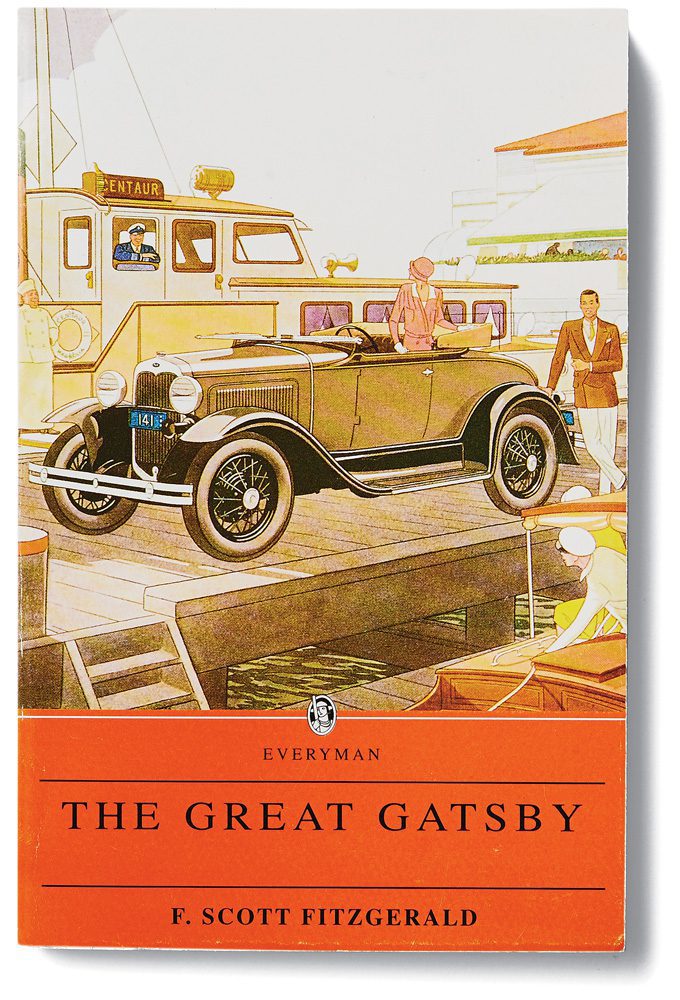
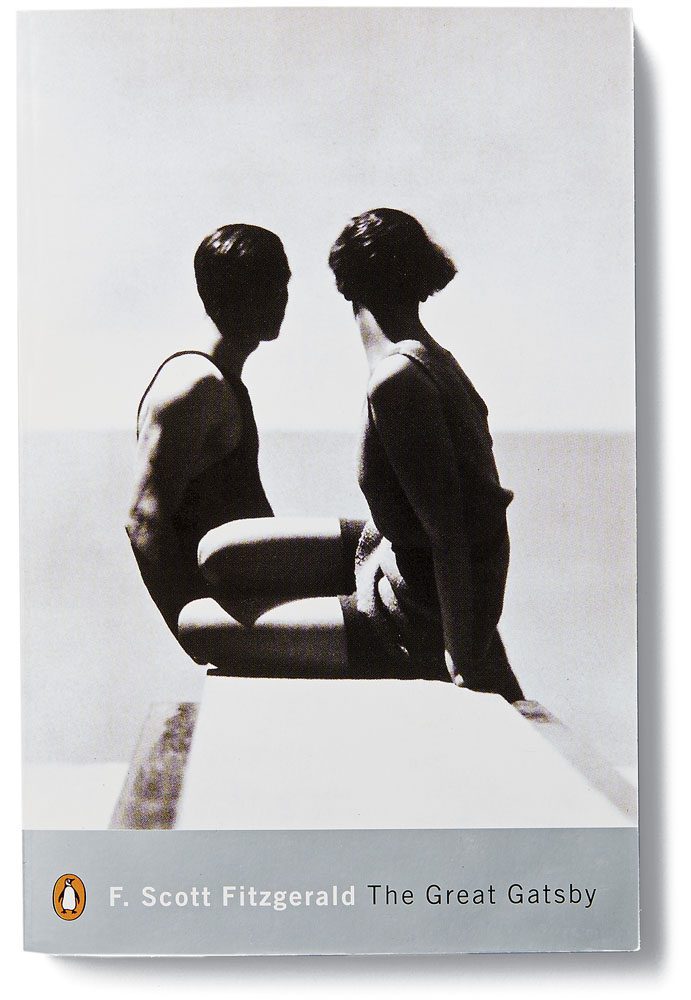
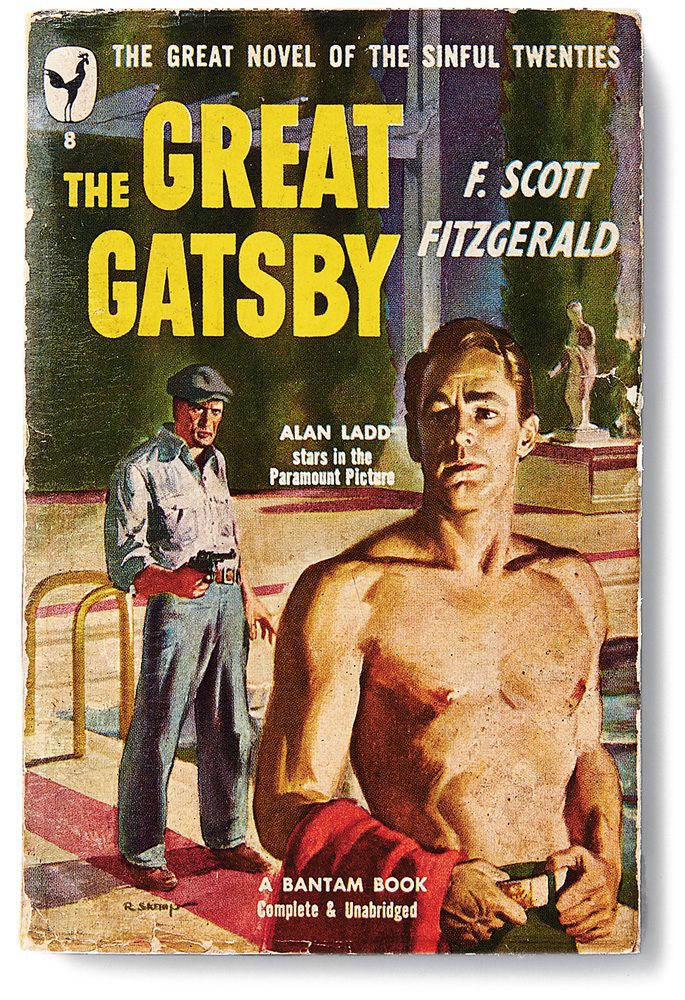
Imitation & Flattery
Imitation & Flattery
Hunter S. Thompson’s “true model and hero was F. Scott Fitzgerald,” a fact meaningful enough to include in a eulogy in the New Yorker:
He used to type out pages from The Great Gatsby, just to get the feeling, he said, of what it was like to write that way, and Fitzgerald’s novel was continually on his mind while he was working on Fear and Loathing in Las Vegas.
Meanwhile, Andy Kaufman’s take on the material was perhaps less reverent than either Thompson’s or Elevator Repair Service’s homages/recitations, and certainly less well-received: watch him get boo’d before he gets 8 minutes into the text, let alone 8 hours:
Andy Kaufman reading The Great Gatsby
Daniel Mallory Ortberg’s hilarious, incisive “Male Novelist Jokes” doesn’t name names, but you may catch a whiff of F. Scott in this reading. (Bonus: yes, that’s Roxane Gay laughing in the background.)
Q: How many male novelists does it take to screw in a lightbulb?
A: He lit a cigarette. His glass of whiskey lit a cigarette too… His alcoholism was different, because someday he was going to die.