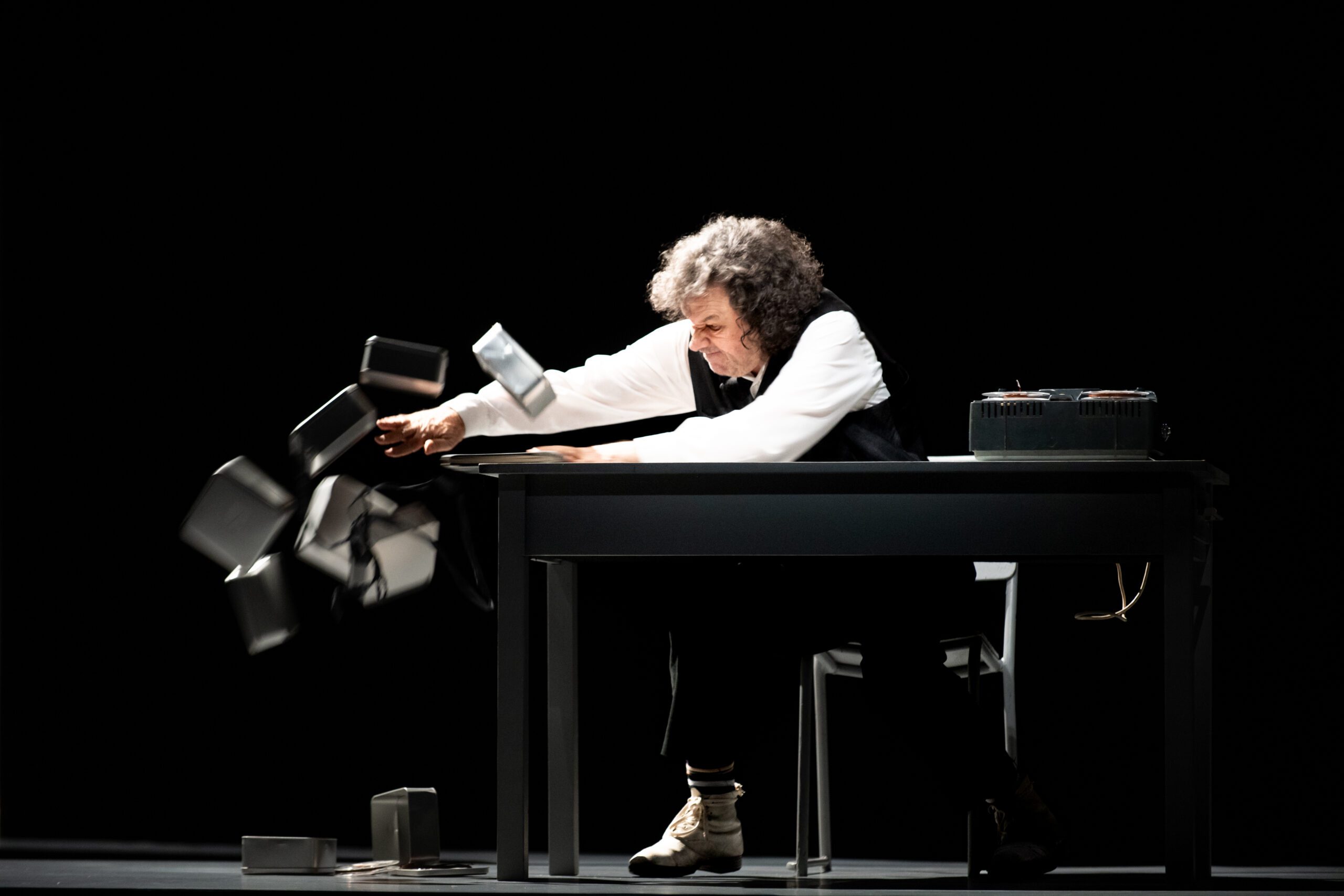
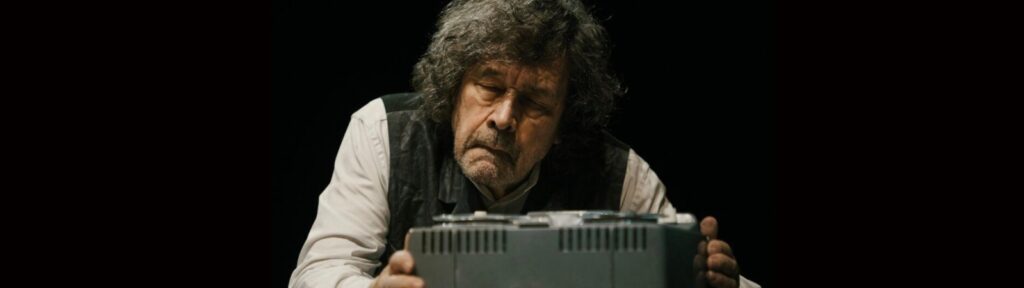
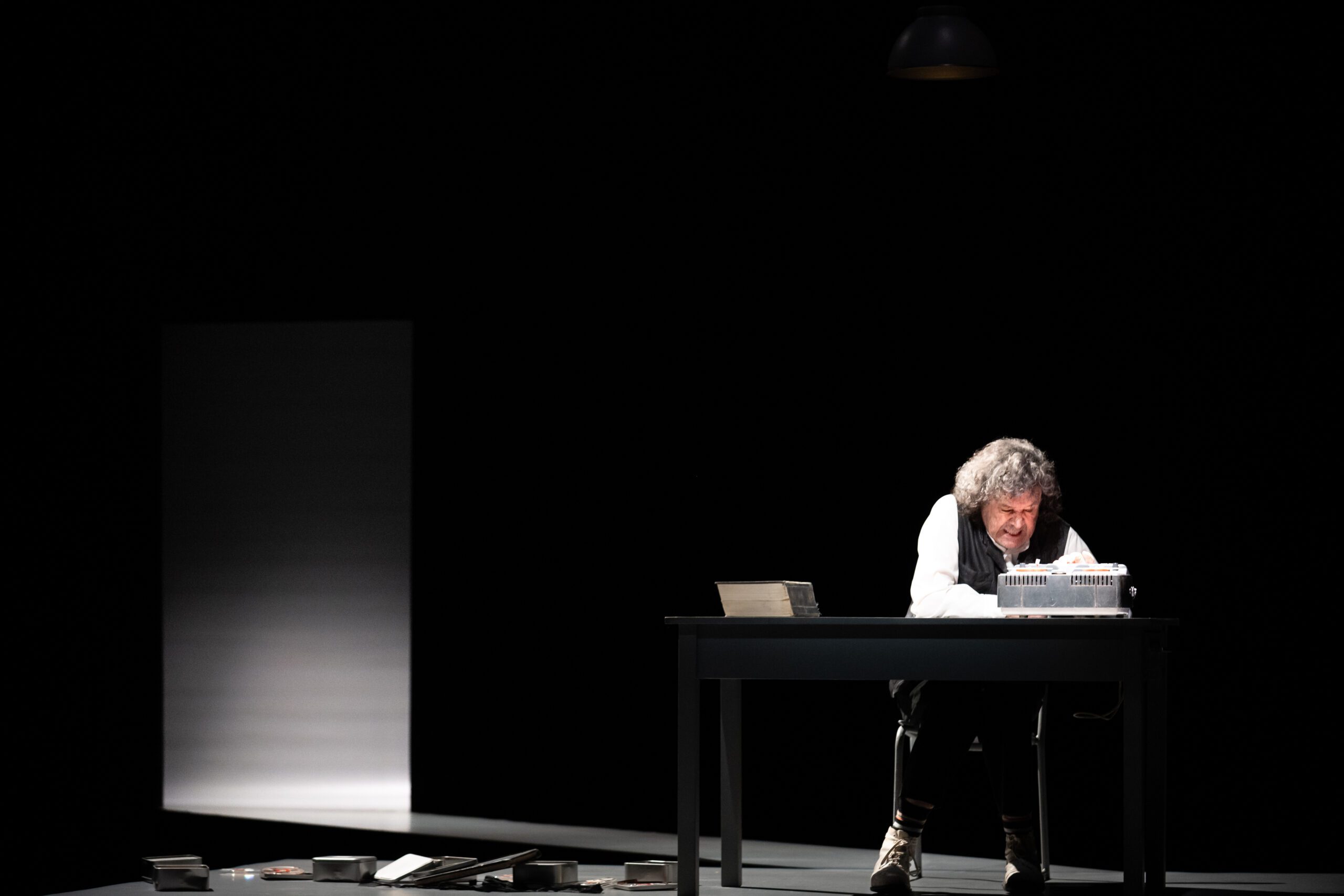
In Krapp’s Last Tape, the eponymous Krapp records a tape every year on his birthday. On his 69th birthday, he listens back to a previous year’s tape.
Actor Samuel Rea, who stars in the one-act, had the foresight to record himself in 2009, in the event of a future opportunity to play Krapp. In this production, he plays against his own younger self on cassette.
I had no certainty that one day I might play Krapp, but I thought it a good idea to pre-record the early tapes so that the voice quality would differ significantly from that of the older character, should the opportunity ever arise to use it.
Learn more about the production.
OFFICE HOURS
OFFICE HOURS
Stephen Rea, Vicky Featherstone and Professor John Waters give a mini masterclass in all things Beckett. Learn about the advice Stephen didn’t take from Sam Shepard and the acting notes he got from Beckett.
RELATED EVENTS
RELATED EVENTS
GET INTO IT
GET INTO IT
Krapp’s Last Tape Trailer
GET THEE TO THE LIBRARY
GET THEE TO THE LIBRARY
Recommended readings to get you in gear for the show.
- Emily Hodgson Anderson. Shadow Work: Loneliness and the Literary Life. Columbia University Press, 2025.
- Galina Kiryushina, Einat Adar, and Mark Nixon, editors. Samuel Beckett and Technology. Edinburgh University Press, 2021.
- Mantra Mukim. Samuel Beckett’s Lyric Failure. Bloomsbury, 2025.
- Daniel Sack. Samuel Beckett’s Krapp’s Last Tape. Routledge: 2016.
CURRICULAR SPOTLIGHT
CURRICULAR SPOTLIGHT
Learn more about NYU’s Media Preservation program, which ensures that physical media in NYU’s archives – such as cassettes – are appropriately handled, digitized and otherwise preserved.
READ ALL ABOUT IT
READ ALL ABOUT IT
Review: Stephen Rea is hauntingly good in Beckett’s masterpiece
Rea brings a harsh, almost sarcastic tone to his self-criticism, deepening its pathos.
Holy Krapp! Gary Oldman and Stephen Rea unspool Beckett’s masterpiece about memory
Krapp’s Last Tape is not quite a monologue.