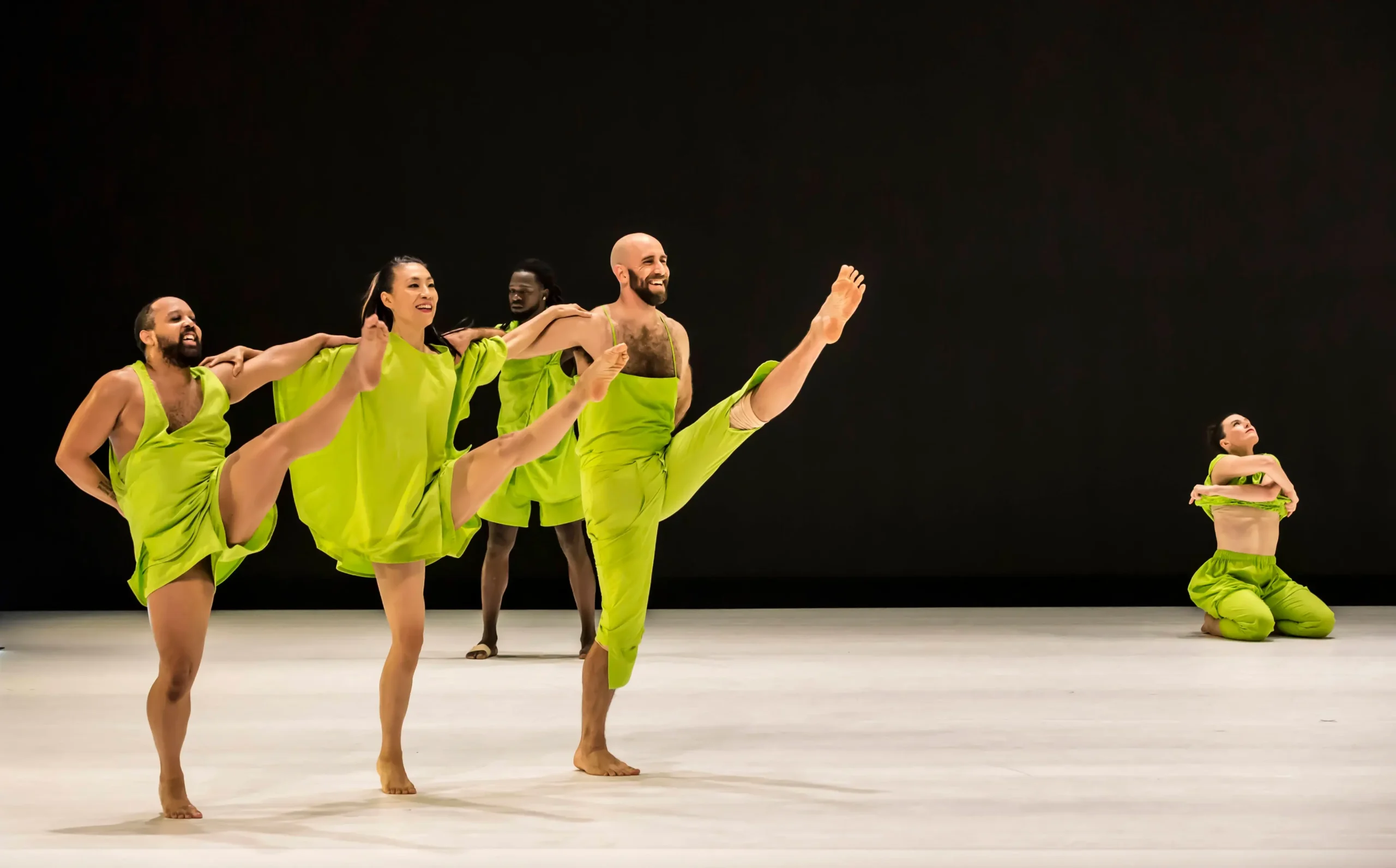
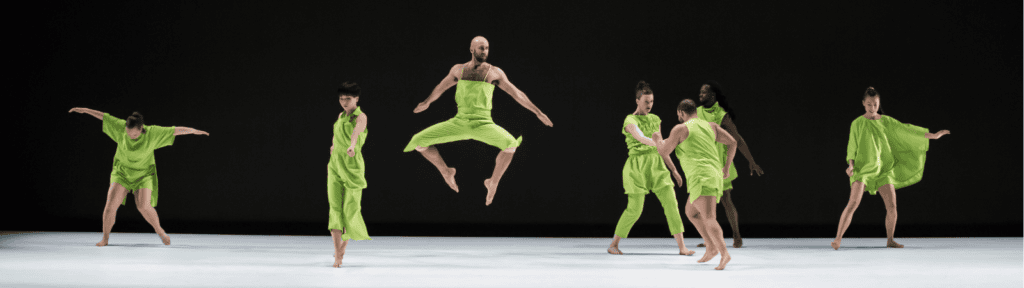
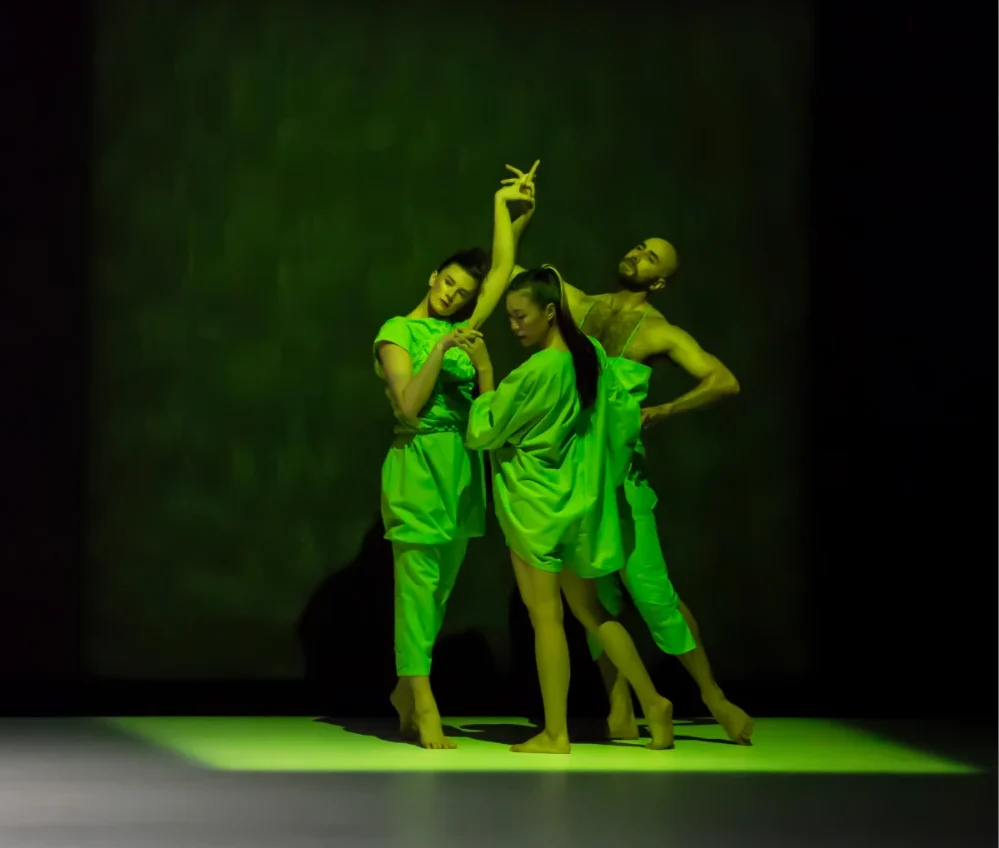
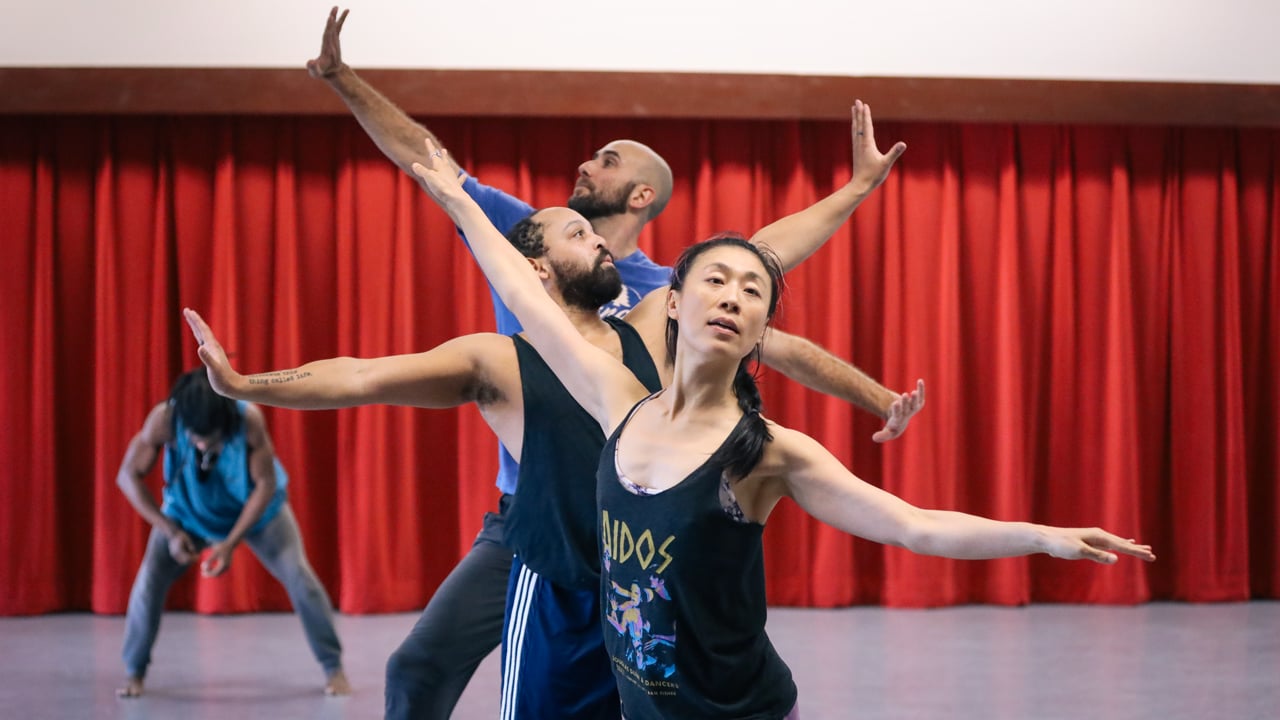
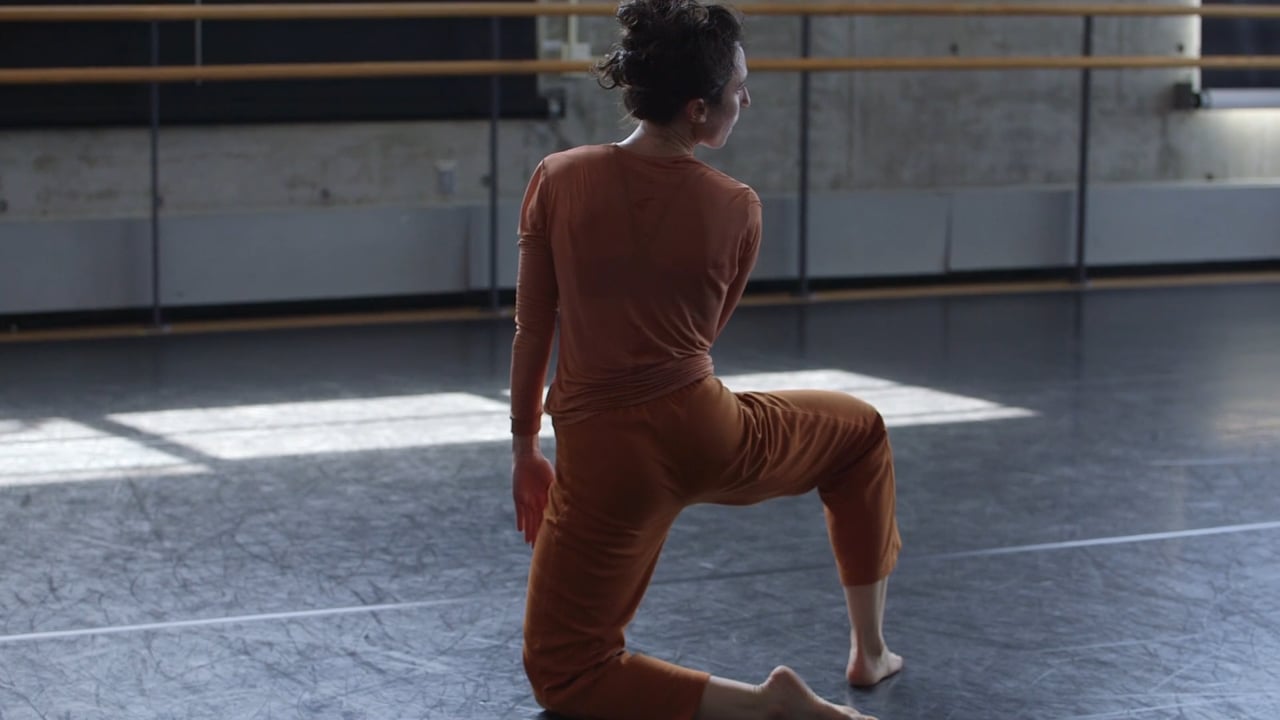
The New York premiere of Netta Yerushalmy’s MOVEMENT brings together a tapestry of gesture, using citational practice to explore authority and originality. Learn more here.
Read about the history of dance notation in Anna Heyward’s “How to Write Dance,” in The Paris Review (2015):
How do you tell a person in another place or time what a dance looks like, and how it should be performed? You could use words, describing, second by second, the movements made by every dancer on stage—but inaccuracies would creep in. Take an instruction as simple as “lower your arm”: How would the precise angle, attitude, and displacement of the arm be explained? As an algebraic vector? And what about the hand, the fingers, the knuckles, the rest of the dancer’s body—what are they doing? Such a method would come to resemble programming code, in which reams of language and symbols come to stand for something that’s supposed to look simple and elegant. The problem is that a dance is read by a human, not a machine.
RELATED EVENTS
RELATED EVENTS
GET INTO IT
GET INTO IT

GET THEE TO THE LIBRARY
GET THEE TO THE LIBRARY
Recommended readings to get you in gear for the show.
- Susan Leigh Foster, Valuing Dance: Commodities and Gifts in Motion. Oxford University Press, 2019.
- Helen Julia Minors, Music, Dance and Translation. Bloomsbury Publishing, 2023.
- Megan V Nicely, Experimental Dance and the Somatics of Language: Thinking in Micromovement. Chasm: 2023.
- Anna Pakes, Choreography Invisible: The Disappearing Work of Dance. Oxford University Press, 2020.
- Leena Rouhiainen, Kirsi Heimonen, Rebecca Hilton, Chris Parkinson, editors, Writing Choreography: Textualities of and Beyond Dance. Routledge, 2024.
READ ALL ABOUT IT
READ ALL ABOUT IT
Netta Yerushalmy by Jack Halberstam
Paramodernities is something entirely new, built upon the ruins of aesthetic practices that have become part of a modern vocabulary of expressive culture.
Netta Yerushalmy’s Cabinet of Dance Curiosities
Ms. Yerushalmy’s work melds daring ideas with lush movement that makes space for nuance and detail.
Netta Yerushalmy is Changing the Way We Look at Balanchine. And Fosse. And Ailey.
In Paramodernities, Netta Yerushalmy deconstructs dance masterworks and presents their movement alongside scholarly essays that contextualize them.
Netta Yerushalmy’s Perfect Dance
Sometimes everything about a dance performance seems right.nt alongside scholarly essays that contextualize them.
Viewpoints on Pluralism
Viewpoints on Pluralism
Does the Enlightenment’s Great Female Intellect Need Rescuing?
Du Châtelet wrote as movingly as anyone ever has about love found and lost, and that, too, is as much a part of her legacy as her now rediscovered “pluralistic” vision of physics. Indeed, one draws on the other.

“Pluralism in Logic” by Harry Field
A number of people have proposed that we should be pluralists about logic, but there are several things this can mean. Are there versions of logical pluralism that are both high on the interest scale and also true?

Of Many Institute for Multifaith Leadership
Launched in 2012, Global Spiritual Life aims to foster conversations about the role of religion in diversity in higher education, and offer trainings, tools and experiences that cultivate belonging. GSL was founded by Linda Mills, Chelsea Clinton, Rabbi Sarna and Imam Latif.
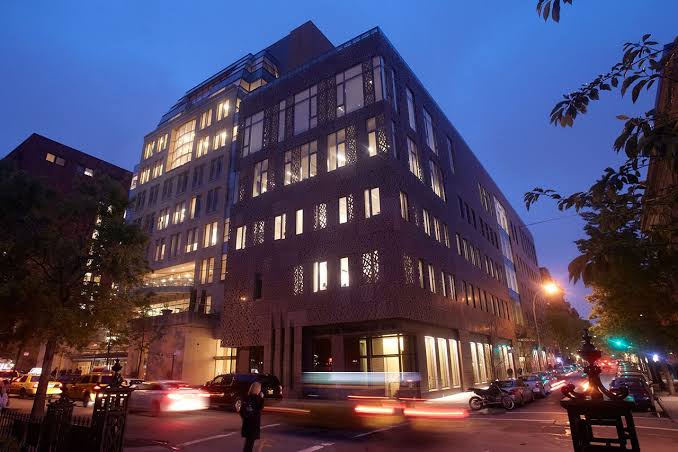
Understanding Diversity: Teaching Pluralism
This course explores the possibilities and challenges educational theatre practitioners, and teachers in general, face as they explore such issues as ethnicity, sexual orientation, gender, socioeconomic class ability, nationality, and linguistic diversity with their students.