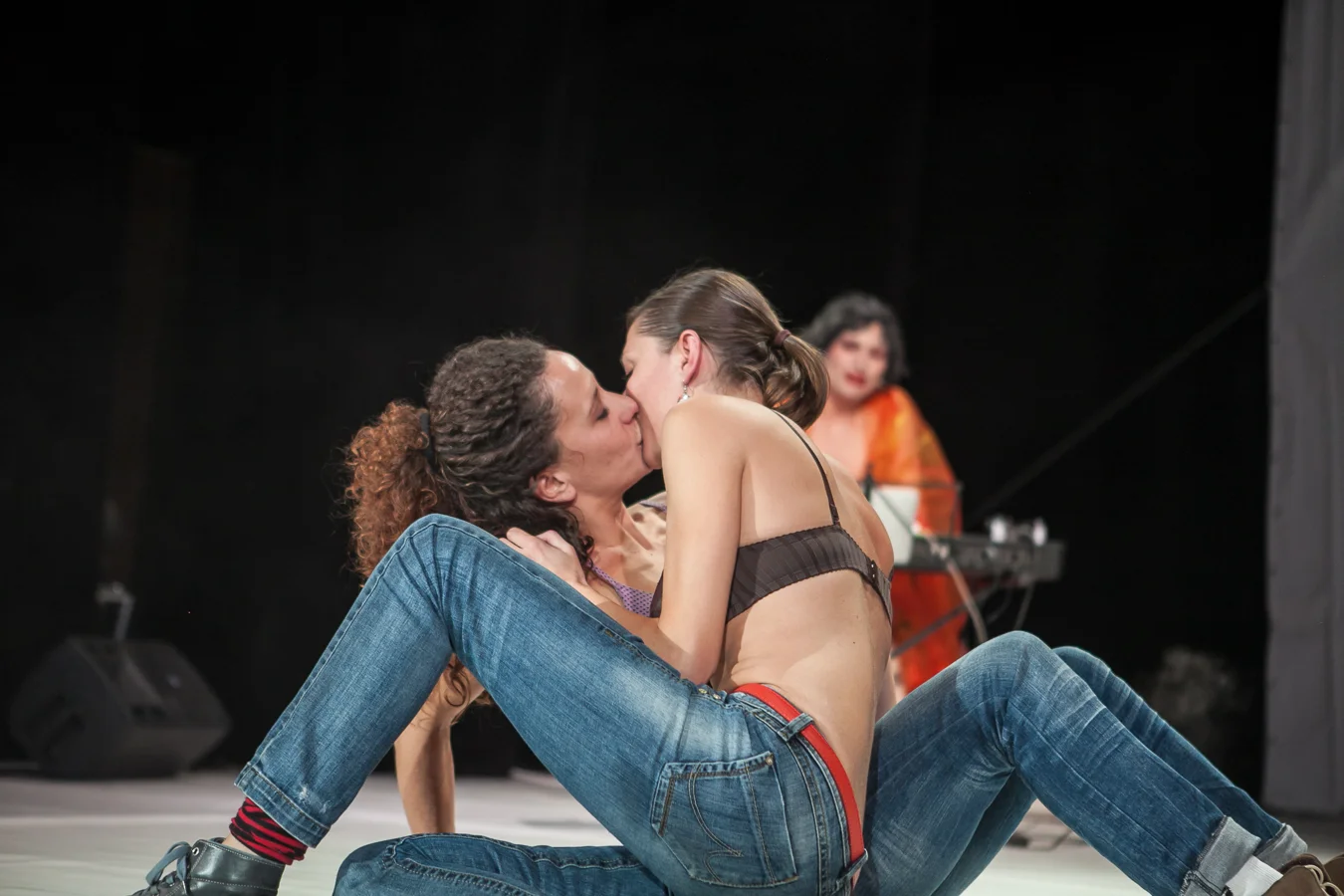
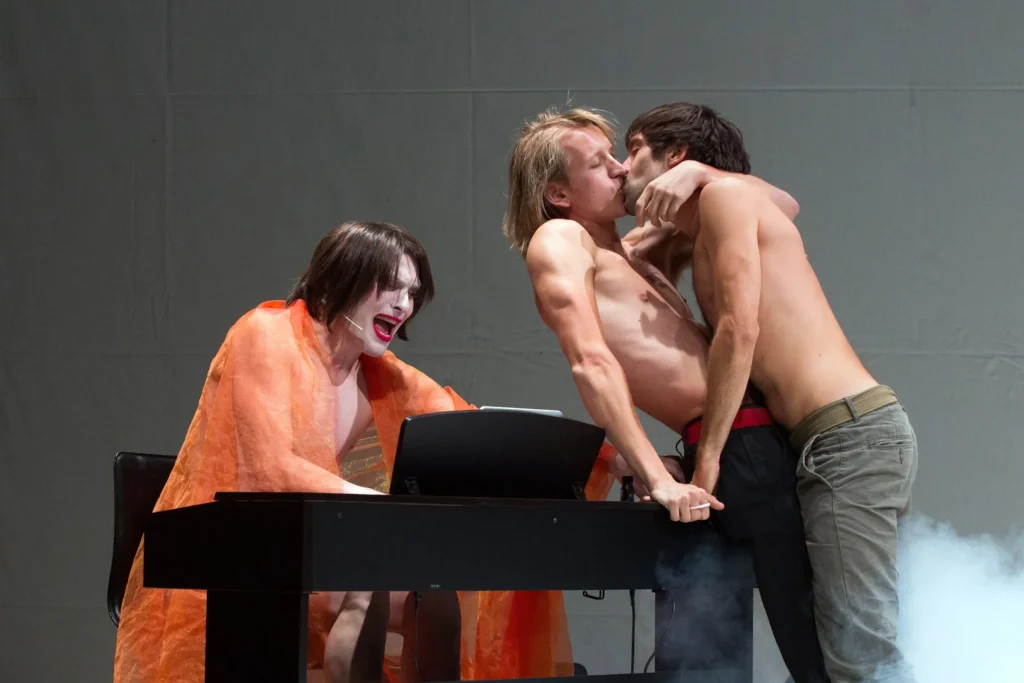
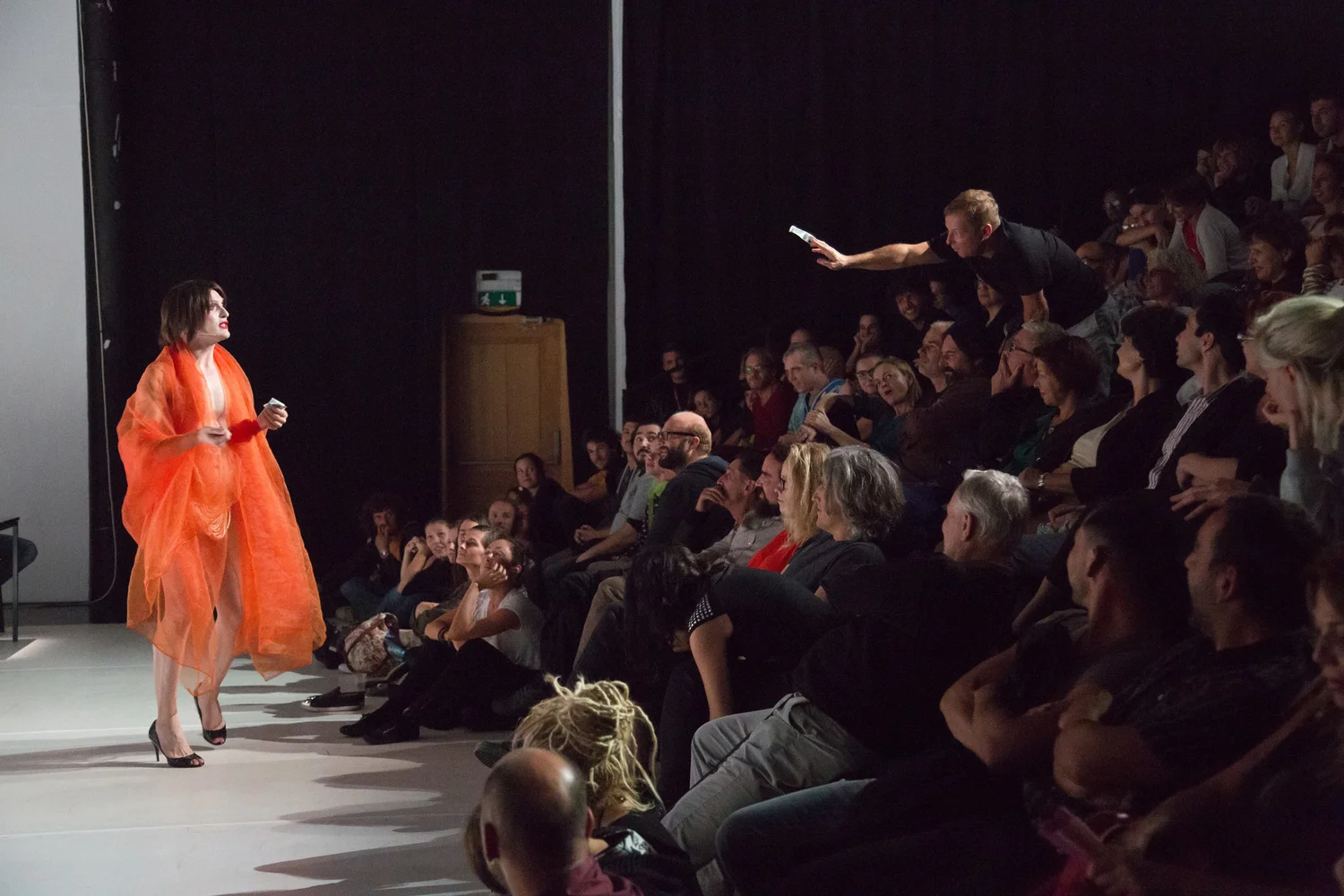
In P Project, multidisciplinary and “vividly provocative” Bulgarian performance artist Ivo Dimchev asks the audience to consider what they’ll do for cash, in an interactive performance project that takes “audience participation” to new extremes. He describes P Project during an interview with Bean Gilsdorf at SFMoMA:
In P Project sometimes I don’t like what’s going on, but I have to deal with it. I have to get in contact with elements that I find very stupid and very bad and very disgusting as dramaturgy or as movement material. I put myself in relation to those subjects, and I look for the beauty… It’s very hard for me to fail. It’s almost impossible for me to fail. But in P Project, everything’s falling apart. The lyrics people write are always really bad and sometimes very weak. I have to immediately make a song out of it, and I have to accept and find joy in it. And it’s possible to find something beautiful and have a nice experience with combining elements, but everybody’s failing and nothing is perfect — and somehow, because of our intention, it somehow works, we accept these failures and find beauty in them.
Learn more about Ivo and his other works (or buy a t-shirt featuring his art), and read more about his thoughts on P Project with another interview from What’s On.
RELATED EVENTS
RELATED EVENTS
GET INTO IT
GET INTO IT


OFFICE HOURS
OFFICE HOURS
READ ALL ABOUT IT
READ ALL ABOUT IT
Two Reviews of P Project
He begins with palms pressed in prayer. “Thank you god, for bringing us together. Please give us a good show, but no more than we deserve.”
Anatomy of a Walk-Out: When the Critic Leaves the Theatre
I would like to apologise to the organisers of the BE Festival and Ivo Dimchev for my melodramatic walk-out towards the end of last night’s performance of P Project.
Review: Ivo’s “I-Cure”
When a choreographer like Ivo Dimchev proposes a performance work intended to promote healing, you can’t help feeling suspicion.
Review: Ivo’s “Lili Handel”
By the end of the night he drew his own blood into a vial and auctioned it off to the highest bidder. It was fantastic.