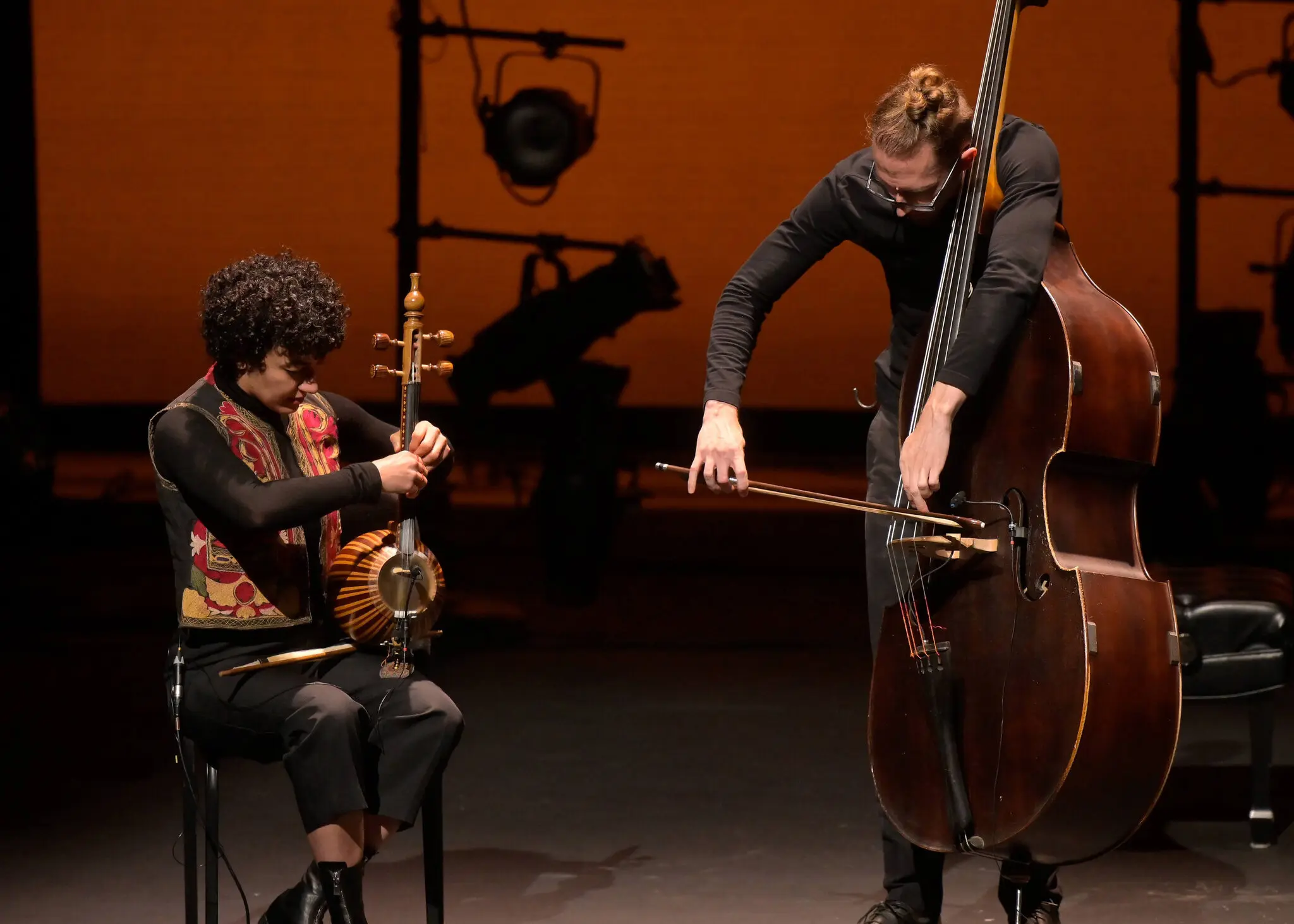
Learn more about International Contemporary Ensemble, and Iranian Female Composers Association (IFCA).
Reasons to get excited for “Peyvand”:
- We love community building! The Iranian Female Composers Association (IFCA) aims to build and support a growing community of composers from the Iranian diaspora. This time, it brings us an evening of works related to Peyvand, the Persian word for connectivity.
- We love representation! Historically, a gender imbalance has been visible in Iran’s national and international new music scene. As a response to this gap, IFCA features the work of Iranian female and non-binary composers.
- International Contemporary Ensemble joins IFCA in this exploration of social and artistic connectivity — since its founding in 2001, the Ensemble has grown as a collective of musicians, digital media artists, producers and educators who create collaborations built on cultural responsiveness, equity and belonging.
RELATED EVENTS
RELATED EVENTS

THE ARTISTS
THE ARTISTS
IFCA
IFCA, co-founded by Anahita Abbasi, Niloufar Nourbakhsh, and Aida Shirazi, is a group of artists who have combined their experiences and creativity to create a platform for otherwise-unheard musical voices from the Iranian diaspora, and build and support a growing community of female and non-binary identifying composers. IFCA has formed connections with dozens of female and non-binary identifying composers from the Iranian diaspora.
Aida Shirazi
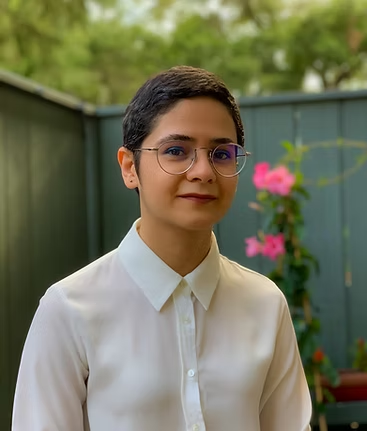
Born and raised in Tehran, Iran, Aida Shirazi is a composer of acoustic and electroacoustic music. Shirazi’s music is described as”unfolding with deliberation” by The New York Times, “well-made” and “affecting” by The New Yorker, and “unusually creative” by San Francisco Classical Voice.
In her works for solo instruments, voice, ensemble, orchestra, and electronics she mainly focuses on timbre for organizing structures that are often inspired by Persian or English languages and literature, as well as Iranian classical music.
Shirazi’s music has been featured at festivals and concert series including Manifeste, Mostly Mozart, MATA, New Music Gathering, Direct Current, Taproot, and Tehran Contemporary Music Festival in venues such as Maison de la Radio France, Lincoln Center, Kennedy Center, National Sawdust, and the DiMenna Center. Her works are performed by Orchestre Philharmonique de Radio France, Miranda Cuckson, International Contemporary Ensemble, Quince Ensemble, Ensemble Dal Niente, Left Coast Chamber Ensemble, Empyrean Ensemble, and Bilkent Symphony Orchestra among others.
Currently, Shirazi is a Ph.D. candidate of composition at the University of California, Davis and works with Mika Pelo. She has studied with Pablo Ortiz, Kurt Rohde, Yiğit Aydın, Tolga Yayalar, Onur Türkmen, and Hooshyar Khayam as well as participating in workshops and masterclasses by Mark Andre, Claus-Steffen Mahnkopf, Riccardo Piacentini, and Füsun Köksal, among others. Shirazi holds her B.A. in classical piano from Tehran University of Art (Iran), and her B.M. in music composition and theory from Bilkent University (Turkey). During the years 1998-2004, she studied santoor (traditional Iranian hammered dulcimer) with Parissa Khosravi Samani. Shirazi is a participant of IRCAM’s “Cursus Program in Composition and Computer Music” in the academic year 2021-22.
She is a co-founder and board member of the Iranian Female Composers Association (IFCA).
Anahita Abbasi
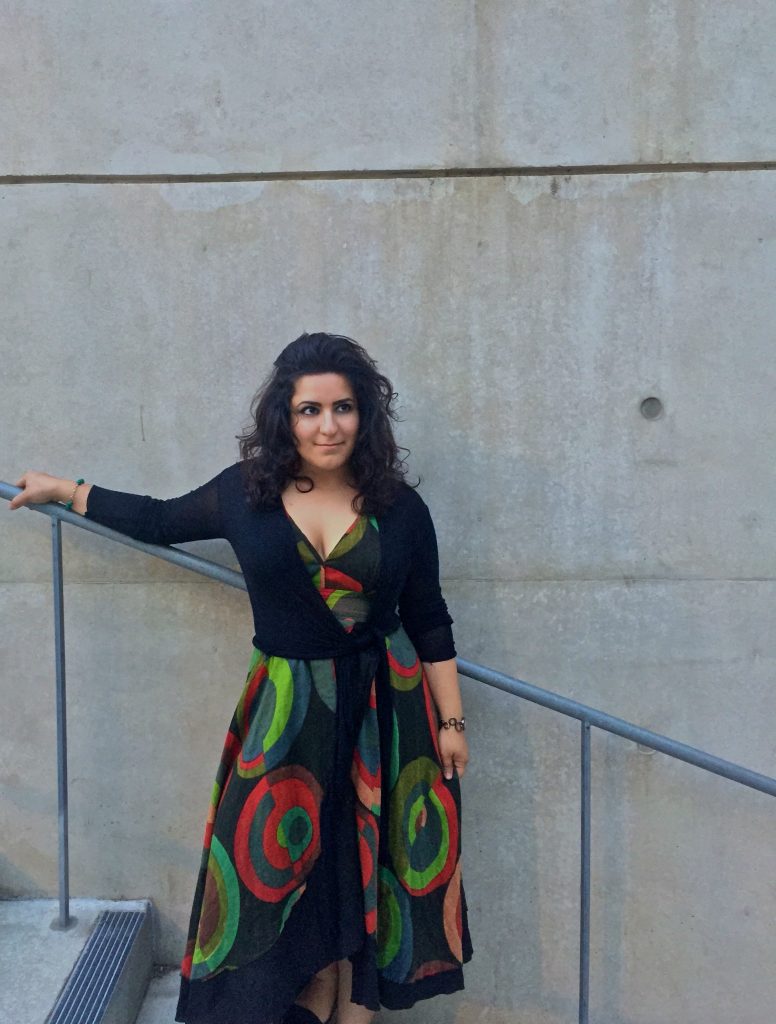
Anahita Abbasi, composer, co-founder of Schallfeld Ensemble and IFCA, is one of three people selected by Georges Aperghis to receive his 2024 Grand Prize in Composition from the Académie des Beaux-Arts.
Abbasi’s music has been commissioned and performed worldwide by renowned musicians, including Mahan Esfahani, Steven Schick, Ilan Volkov, Vimbayi Kaziboni, Jack Adler, Sergej Tchirkov, Ensemble Modern, Lines Ensemble, International Contemporary Ensemble, Meitar Ensemble, Der gelbe Klang, EBU, Zaafran Ensemble, Contrechamps, Contemporary Chamber Orchestra Elbe, Broken Frames Syndicate, Kommas Ensemble, TAK Ensemble, Seattle Modern Orchestra, Ume Duo, Long Beach Opera, Quatuor Diotima, Mivos Quartet, Argonaut Quartet, Thin Edge, neuverBand, Omnibus Ensemble, Schallfeld Ensemble, and others.
Her works have been featured internationally at festivals such as Darmstädter Musiktage, Akademie der Künste Berlin, Acht Brücken Festival, Radialsystem, Beethovenfest Bonn, Podium Esslingen, Heroine festival, Tritonus Festival, Elbphilharmonie (Germany), IRCAM – Manifeste Academy, Festival Ensemble (France), Time of Music (Finland), BIFEM (Australia), Klangspuren Schwaz, Impuls Festival (Austria) Sound State Festival (Southbank Centre, London), Tectonics (Glasgow), Klang Festival (Copenhagen), Contempuls (Prague), Tongyeong International Music Festival (Korea), Musica Polonica Nova (Poland), Atlas Festival, Grachten Festival (Netherlands), Borealis Festival (Norway), Festival Archipel (Geneva), Gaia (Tel Aviv), Mostly Mozart Festival, Kennedy Center, Lincoln Center, The Kitchen, Roulette, National Sawdust, Time Spans (USA), and many others.
Ms. Abbasi has received numerous awards, including a work-scholarship from the Experimental studio of SWR, Freiburg (2014), a Morton Gould ASCAP Young Composers Award (2015), a nomination for „Composers of Our Time“ (2017), the Composition Prize of the Acht Brücken Festival (2020), the German Record Critics’ Prize 2020 (Mahan Esfahani’s album MUSIQUE?), and the New Music USA creator’s fund award (2025). In 2022, she was awarded the Civitella Ranieri Fellowship in Italy, a Ucross Foundation Residency in Wyoming, and a three-year residency at the Fondation Singer-Polignac in Paris. She is also one of the recipients of the 2024 Music Prize from the Académie des Beaux-Arts in Paris, recognized by Georges Aperghis. In 2025, she received the New Music USA’s creators‘ fund for her project “Thawing Tides”.
In addition to being a founding member of the Schallfeld Ensemble (Austria, 2013), she is also a founding member of the Iranian Female Composers Association (IFCA, USA, 2017). Anahita Abbasi studied composition with Beat Furrer and Pierluigi Billone at the University of Music and Performing Arts Graz (KUG) in Austria and worked closely with Georges Aperghis, Franck Bedrossian, and Philippe Leroux. In 2014, she moved to the USA to pursue a PhD in composition with Rand Steiger at UC San Diego.
Currently, Anahita Abbasi lives in New York, Flensburg, and in Paris. Her recent projects include commissioned works for Ensemble Modern and Jack Adler, both premiered at the Darmstädter Musiktage in 2023. Her upcoming projects include a commission from the Présences festival (Radio France – Premiere February 2026) as well as a commission from the EBU for a flute concerto for Claire Chase and with Philharmonie de Radio France (2027-2028).
Bahar Royaee
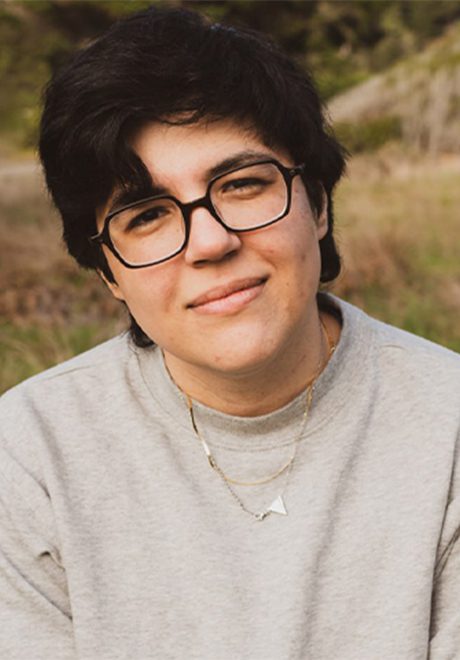
Bahar Royaee is a Iranian composer/sound designe whose original acoustic and electro-acoustic music has been acclaimed as “succeed(ing) as a poetic incantation, brimming with ideas and colors” (Classical Voice North America) and “haunting” (Boston Arts Review).
Recipient of the prestigious Fromm Foundation Commission Awards in 2024, Royaee writes music for various genres, from opera, theater, and film to chamber music. Her work has been performed by luminaries such as Claire Chase, International Contemporary Ensemble, Ensemble der gelbe Klang, Jack Quartet, Fabrique Quartet, Splice Ensemble, and Lamnth. Significant chamber music performances include Biennale Venice 2024 with Hannah Levinson, Festspiele festival in Germany with Opus21 ensemble (2024), Composer Conference Gala 2024 with Talea Ensemble, Ultraschall Berlin with Muriel Razavi (2023), Berlin Prize for Young Artists with Adam Woodward (2023), ICE Festival Germany with ensemble Tempus Konnex (2022), Tehran Electroacoustic Music Festival (2022) and Time: Spans Festival (2020) with International Contemporary Ensemble and Suzanne Farrin.
Golfam Khayam

Golfam KHAYAM’s music described by AL Jazeera as “Innovative Art“
Iranian composer & improviser, her career reflects her unique musical language through the integration of her native musical elements within a contemporary experimental musical framework. Golfam has appeared extensively as performer, composer, and her music is being performed worldwide, spreading her musical message in various projects which has been featured as in Elbphilharmonie, NPR ”songs we love”, Danish Cultural Radio, BBC3, Deutchewele, Royal Festival Hall, Ojai festival.
Golfam Khayam was born and grew up in Iran in a family of artists in Tehran. Her selected commissions and collaborations partly include Anne-Sophie Mutter, Barbara Hannigan, Iceland Symphony orchestra, Orchestre de la Radio France, ICE ensemble, London Symphony Orchestra,Stephan Schmidt (Basel), Ivan Podyomov (principle Oboist of Concertgebouw), Copenhagen Guitar Ensemble , Ensemble 21 Geneva, Isabel Villanueva, William Kanengeiser (USC), HEM Geneva String Orchestra premiering by Elena Schwarz, Klangswerkstatt Berlin, Opera Aix en Provence among others. She has initiated a research on technique adaptations from Persian regional ethnic instruments which reflects in a publication ” Tradition and Synthesis”, these findings include ornamentations and creation process. She has signed with Schott and released with the prestigious German label ECM records along numerous other recordings worldwide.
Winner of numerous competitions, scholarships, and prizes. She has been named as the selected composer at the International Music Council, Rostrum of composers in the “Windows on the World” category in 2016 based in Paris. Arvo Pärt center composition scholarships prize. She received HES-SO full fellowship award for the research project of “New Vocabulary” shedding light on the concept of synthesis and cross culture fusion in contemporary music . She has been actively giving workshops on the subject of improvisation and synthesis as guest lecturer which includes Aarhus Royal Academy, Copenhagen Royal Music Academy, Geneva University, Luzern Music University. She is selected as composer in residence for ENOA network for Opera creation journey with Palau de les Arts Reina Sofía.
She holds “Master of Music” from the College-Conservatory of Music, University of Cincinnati (USA). She continued her studies at the HEMGE (Switzerland) , Interprétation Specialisée Solist and acquired the degree of Master of Composition. She is guest Assistant Professor at Art University of Tehran.
Kimia Koochakzadeh-Yazdi

Kimia Koochakzadeh-Yazdi is an Iranian composer and performer. She writes for hybrid instrumental/electronic ensembles, creates electroacoustic and audiovisual works, builds instruments, and performs electronic music. She explores the unfamiliar familiar while being motivated by how melodies unfold through time; finding ways to play with various musical thresholds and exploring musical extremes is something that she is currently attracted to. Her work experiments with merging Iranian music with the more contemporary classical music aesthetics.
Being a cross-disciplinary artist, she has actively collaborated on projects evolving around dance, film, and theater. She is the co-founder and producer of Fashion x Electronics, a collective focused on creating interdisciplinary works based on fashion and electronic music.
Kimia’s work has been showcased by organizations across the globe and her work has been performed internationally at festivals including Ars Electronica, Festival Ecos Urbanos, Tehran Contemporary Sounds, Sonic Matter Festival, New York City Electroacoustic Music Festival, Sound and Music Conference, and Modulus Festival, among others.
She holds a BFA in Music Composition from Simon Fraser University’s Interdisciplinary School for the Contemporary Arts. Kimia is currently based in San Francisco and is a doctorate candidate in Music Composition at Stanford University.
Nasim Khorassani
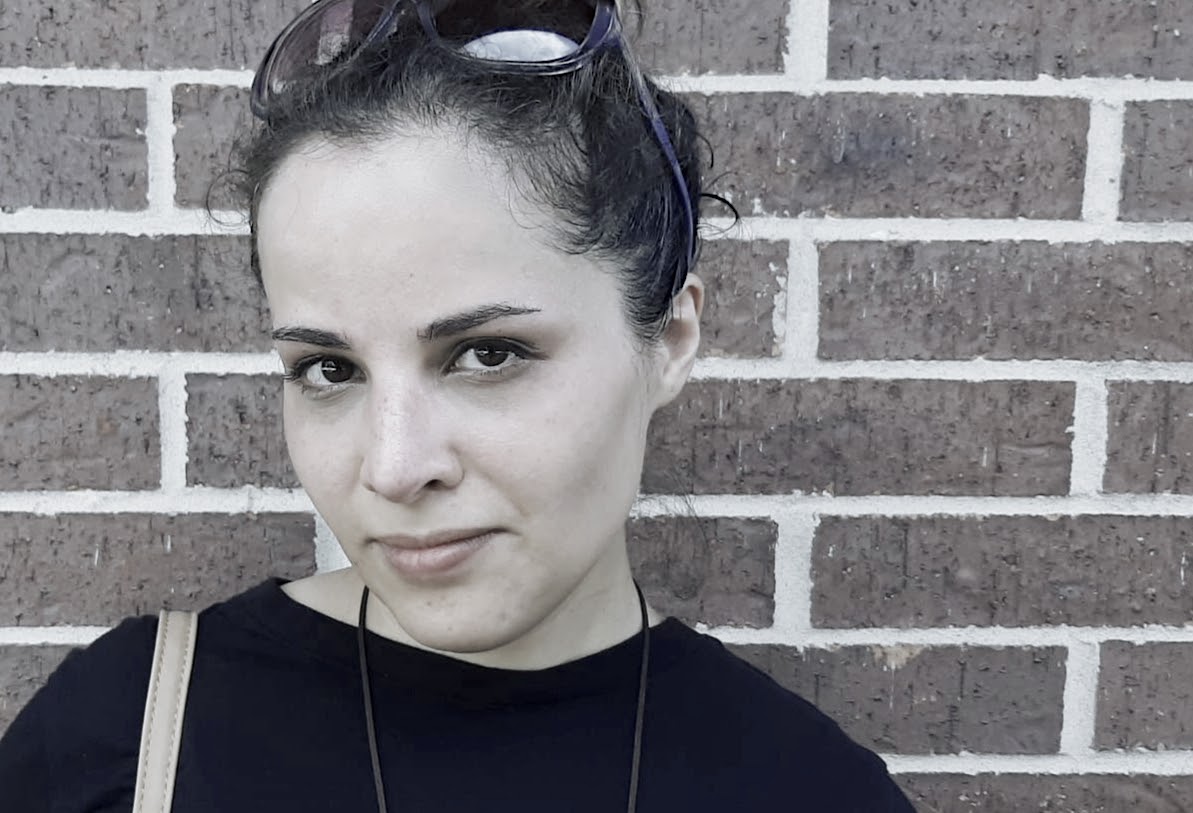
Nasim Khorassani is an ASCAP composer, sound artist, visual artist, educator, and founder of MOAASER, a free online music academy supporting Persian students. Nasim’s music takes various approaches to visuality, emotional connection, and language. Her works have been performed by No Exit New Music Ensemble, Del Sol String Quartet, Patchwork Duo, Zeitgeist, OCAZEnigma, Loadbang, International Contemporary Ensemble, in^set trio, Silkroad Ensemble, Thin Edge New Music Collective, Cepromusic ensemble, and La Jolla Symphony Orchestra across the United States, Europe, Canada, and Mexico. She has also been featured on the Composers Now IMPACT Series and 77th Ojai Music Festival.
During her life in Iran, Nasim created and organized a group of music students who received the DAAD Study Visit scholarship in 2009 as the first Iranian group. In 2012, she met with Peter Ablinger and Klaus Lang in Tehran and performed their music. In 2013, Nasim became among five selected sound artists from Iran for the Iran-UK Sonics residency in London, where she joined various workshops by Keith Rowe and Chris Watson and had her first experimental improvisation with Veryan Weston at Queen Elizabeth Hall. The trip to Germany as her introduction to modern dance expanded throughout her life, influencing the style of music composition she follows today. Nasim received her PhD in Music Composition from UC San Diego, where she worked with Katharina Rosenberger, Marcos Balter, and Rand Steiger.
Nina Barzegar
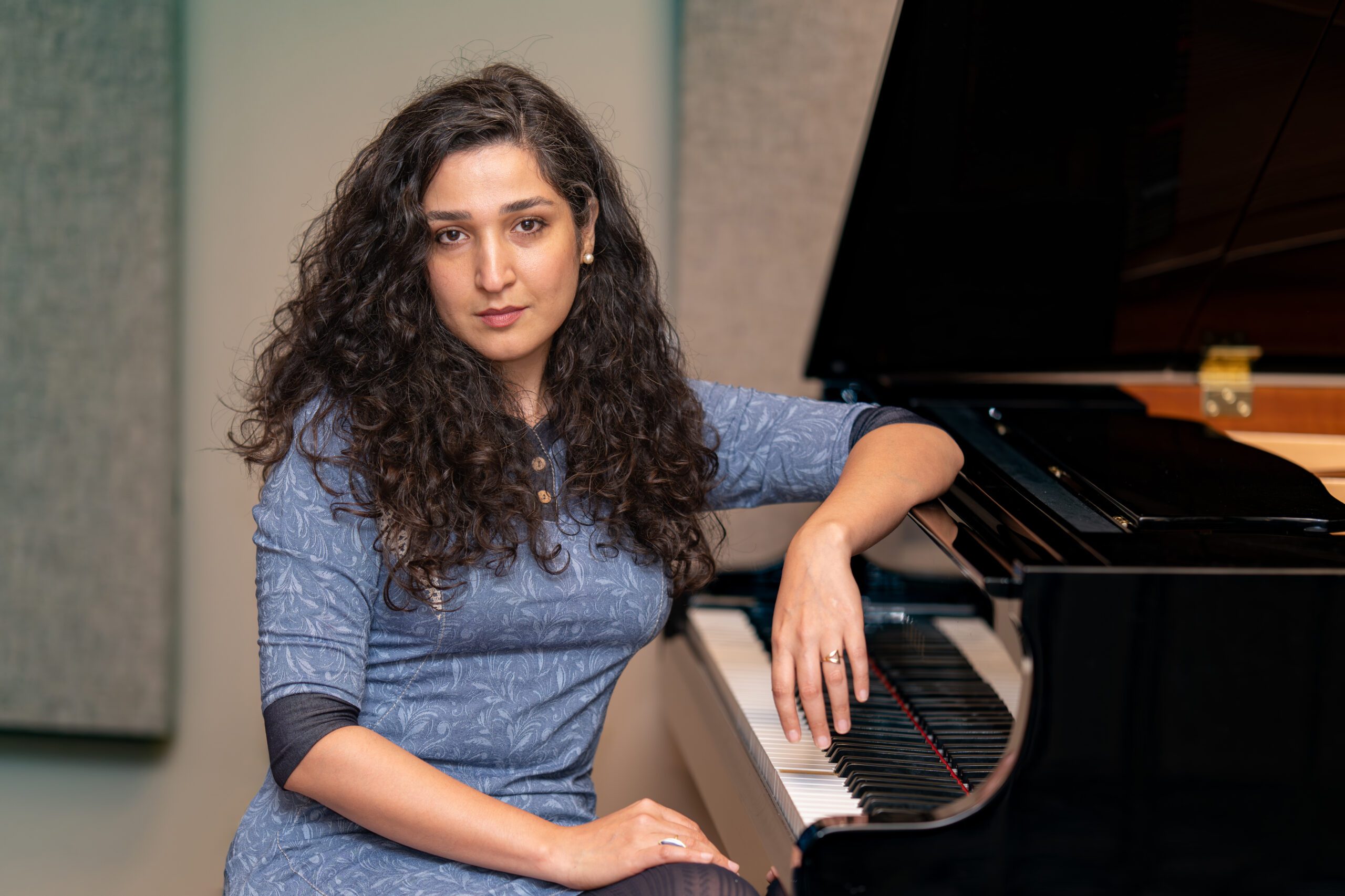
Nina Barzegar is an Iranian composer whose work spans concert music, film, and theater. Her music integrates a wide range of influences, blending traditional and contemporary musical ideas. Barzegar experiments with Persian musical figures and aesthetics, exploring their potential in combination with contemporary music elements. The New York Times has described her music as a “fusion of experimental, extended-technique effects, as well as melodic and chordal inventions.
Niloufar Nourbakhsh

Described as “darkly lyrical” by the New York Times and “séduisante” by Le Monde, Iranian-American composer Niloufar Nourbakhsh is an awardee of 2023 Chamber Music America Commissioning Grant, a winner of 2022 Beth Morrison Projects Next Generation competition, and a 2019 recipient of Opera America Discovery Grant and National Sawdust’s Hildegard Commission Award. Her orchestral work Knell was performed at the 2023 Nobel Peace Prize Ceremony by the Norwegian Radio Orchestra.
Nourbakhsh’s music has been commissioned and performed by Kronos Quartet, L’Orchestre de Paris, Bournemouth Symphony Orchestra, Norwegian Radio Orchestra, Nashville Symphony Orchestra, New York Philharmonic musicians, Orquesta Sinfónica Nacional, Knoxville Symphony Orchestra, Amsterdam Sinfonietta, Klangforum Wien, Library of Congress, National Sawdust, International Contemporary Ensemble, Loadbang Ensemble, I-Park Foundation, Camerata Pacifica, Shriver Hall Series, Center for Contemporary Opera, New Music USA, Women Composers Festival of Hartford, PUBLIQuartet, Forward Music Project, Calidore String Quartet, Cassatt String Quartet, Akropolis Reed Quintet, and Ensemble Connect at numerous festivals and venues including BBC Proms, Ojai Festival, Wiener Festwochen, Mostly Mozart Festival, Carnegie Hall, Washington Kennedy Center, Seal Bay Festival of American Chamber Music, and many more. A founding member and co-director of Iranian Female Composers Association, Nilou is a strong advocate of music education and equal opportunities. She currently teaches theory and composition at Longy School of Music of Bard College and Berklee College of Music. Nilou also regularly performs with her ensemble, Decipher.
Nilou is a music graduate and a Global Citizen Scholarship recipient of Goucher College as well as a Mahoney and Caplan Scholar from University of Oxford. Among her teachers are Lisa Weiss, Kendall Kennison, Laura Kaminsky, Daniel Weymouth, Matthew Barnson, Margaret Schedel and Daria Semegen. She received a Ph.D. in music composition from Stony Brook University under the supervision of Sheila Silver.
Niloufar Shiri
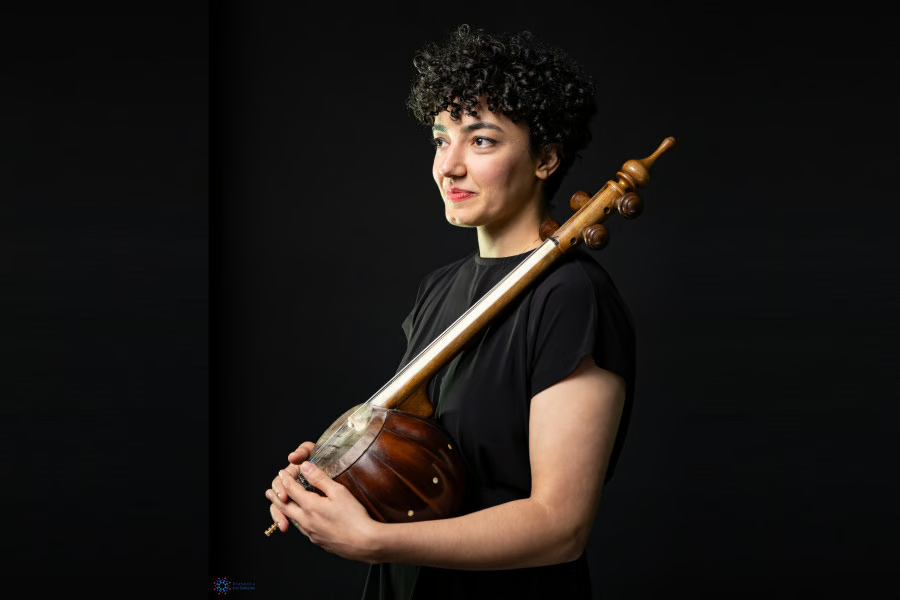
Niloufar Shiri (b.1992), composer, Kamancheh player, and improviser is a graduate of the Tehran Music Conservatory where she closely worked with Maestro Saeed Farajpouri on Kamancheh Performance. Niloufar received her bachelor with honor in composition from the University of California, San Diego where she studied composition with Professors Lei Liang, Katherina Rosenberger, and improvisation with Mark Dresser. In conjunction with her studies at UC San Diego, she has also been directly studying and researching Persian Classical Music with Maestro Hossein Omoumi, a Professor at the Claire Trevor School of the Arts at UC Irvine since 2010. In 2012, the research received a grant from the National Endowment for the Arts. Currently, she is pursuing her Ph.D. in integrated composition, Improvisation, and Technology (ICIT) at University of California, Irvine where she has been awarded provost Ph.D. fellowship from the Claire Trevor School of the Arts as well as a UC Irvine Diversity Recruitment Fellowship.
GET THEE TO THE LIBRARY
GET THEE TO THE LIBRARY
Recommended readings to get you in gear for the show.
- Ruth Hellier, editor. Women Singers in Global Contexts: Music, Biography, Identity (Urbana: Univ. of Illinois Press, 2017)
- Haideh Moghissi, Populism and Feminism in Iran : Women’s Struggle in a Male-Defined Revolutionary Movement (London: Palgrave Macmillan Limited, 2016)
- Nima Naghibi, Women Write Iran: Nostalgia and Human Rights from the Diaspora (Minneapolis: University of Minnesota Press, 2017)
OFFICE HOURS
OFFICE HOURS
READ ALL ABOUT IT
READ ALL ABOUT IT
Finally, a Stage for Female Composers From Iran
“We have so much access to amazing musicians here,” Ms. Nourbakhsh said. “It’s important for us to be able to connect that to people who don’t have that access.”