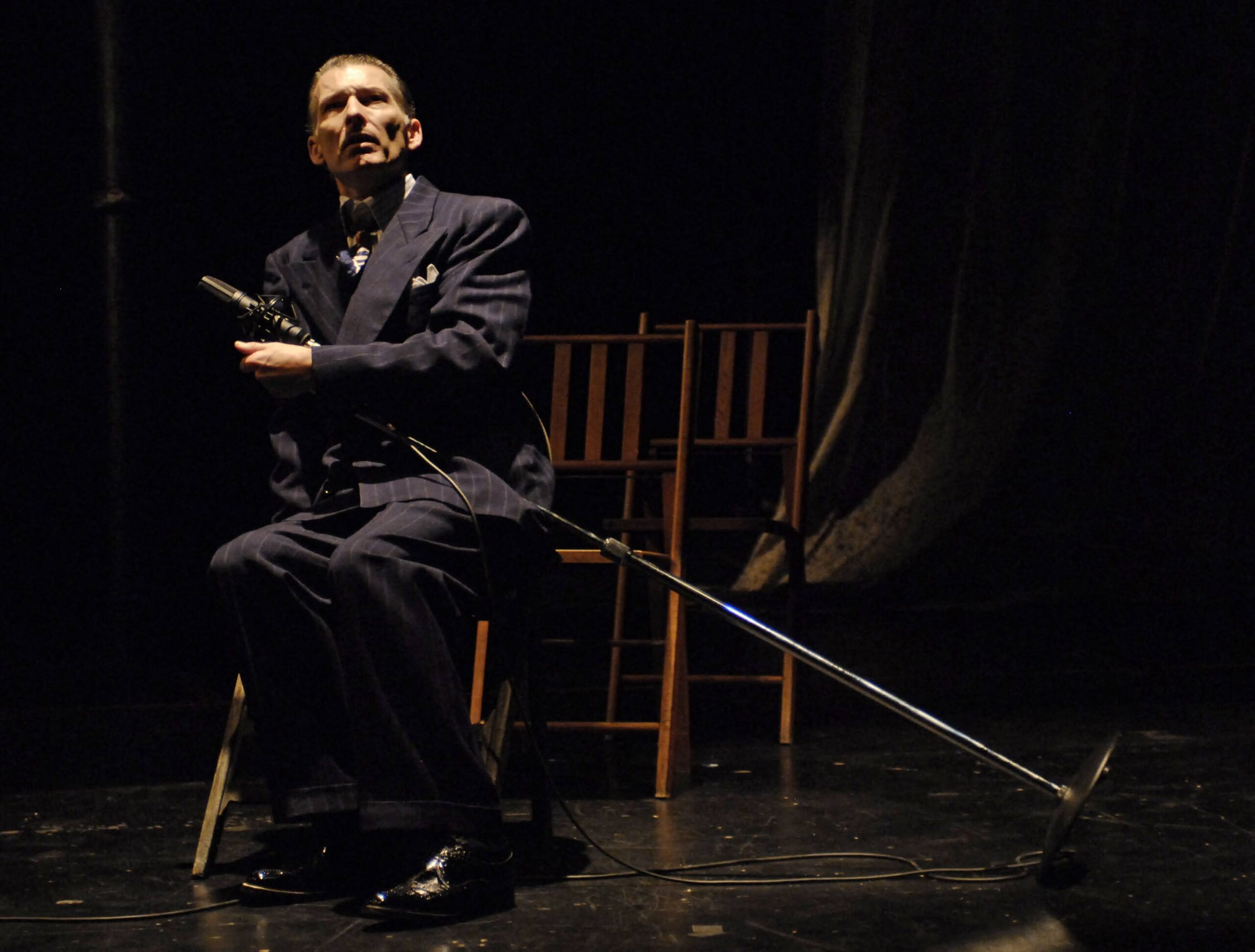
Reasons to get excited for “Radio Macbeth”:
- We love a new twist on a classic text, and this one is a double dose as SITI Company take on both Shakespeare and Orson Welles – giving audiences a nuanced, layered look not only at two versions of “Macbeth” but on the power of live performance.
- We love an ensemble, and SITI Company has brought new depth to the term over its decades of work.
- We love a ghost story – just in time for spooky season.
RELATED EVENTS
RELATED EVENTS

GET INTO IT
GET INTO IT

GET THEE TO THE LIBRARY
GET THEE TO THE LIBRARY
Recommended readings to get you in gear for the show.
- Anne Bogart, A Director Prepares. New York: Routledge, 2001.
- Anne Bogart, And Then, You Act: Making Art in an Unpredictable World. New York: Routledge, 2007.
- Anne Bogart, What’s the Story: Essays about Art, Theater and Storytelling. New York: Routledge, 2014.
- Scott T. Cummings, Remaking American Theater: Charles Mee, Anne Bogart, and the SITI Company. Cambridge: Cambridge Univ. Press, 2006.
- Michael Vanden Heuvel, editor. American Theatre Ensembles. Volume 1, Post-1970 : Theatre X, Mabou Mines, Goat Island, Lookingglass Theatre, Elevator Repair Service, and SITI Company. London: Methuen Drama, 2021
OFFICE HOURS
OFFICE HOURS
READ ALL ABOUT IT
READ ALL ABOUT IT
To Hear Shakespeare, Perchance to Dream of Him
“Radio Macbeth persuasively proposes that the classic work is not merely something to see, but to hear.”
Review: Radio Macbeth
“This impressive use of sound created a rich atmosphere for Shakespeare’s spookiest play.”
Review: Radio Macbeth
“What starts as a simple table reading by a theatrical company during the radio era assumes a life force of its own as the actors gradually take over the stage while the play takes over them.”
ON AIR NOW
ON AIR NOW
Listen to recordings of Orson Welles’ Mercury Theater On the Air, available through the Indiana University Libraries‘ archival project, in collaboration with the National Recording Preservation Foundation.
The Scottish Play
The Scottish Play
Learn more about the so-called curse of Macbeth, and why you shouldn’t say the name of the play in a theater (outside of a performance).
THE CURSE OF THE SCOTTISH PLAY
The Scottish Play. The Bard’s Play. Macbeth is surrounded by superstition and fear of the ‘curse’ – uttering the play’s name aloud in a theatre causes bad luck. But where did this superstition come from?
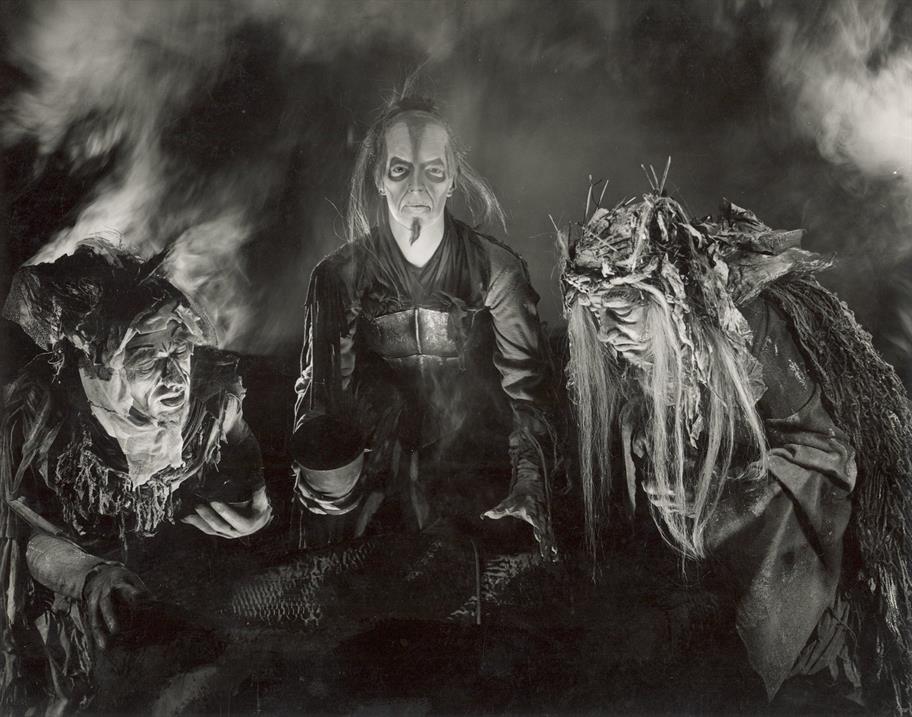
The curse of Macbeth: is it more than superstition?
Whether or not you’ve read Shakespeare’s Macbeth, you’ve probably heard of the play’s famous curse. It’s a legend long feared in theatrical circles, where tradition dictates that neither the production’s title, nor any quotes from it, should ever be spoken in a theatre outside of a rehearsal or performance itself.

Break a Leg but Never Whistle: How Stage Superstitions Live On
The return of the Scottish play (that’s “Macbeth” to the rest of you) is a reminder of the idiosyncratic rituals and routines that bring actors comfort.

Feeling Superstitious: The Scottish Play
It’s no secret that theatre people are a superstitious bunch. With the rich history of performing arts, it’s no wonder that traditions to ward away bad luck or even ghosts have been passed down through the centuries.
SITI Company’S Final Season
SITI Company’S Final Season
NYU Skirball is honored to be hosting SITI Company in their final performing season, with the restaging of a classic work. Learn more about their decision to transition the company into its new iteration.
Press Release
At the conclusion of the finale season in December 2022, SITI Company will cease to operate in its current iteration as a touring, teaching, performing ensemble with an administrative staff and a studio. The business entity that remains, SITI, Inc, will provide service to the field, functioning as a bridge between the legacy of SITI and new generations of ensembles for exploration of international artistic endeavors, and as a hub for archival inquiries, training inquiries and alumni support.
SITI Company Announces Final Season
“This was a very emotional and personal decision,” Bogart, the company’s co-artistic director, said in an interview on Tuesday. “Some of the actors have been with the company for around 30 years.” But the company is far from finished, Bogart said. Training and teaching will continue after 2022, and some members, herself included, will continue to work on theatrical projects together. “There’s an appetite for the classes like you wouldn’t believe,” [Anne Bogart] said.