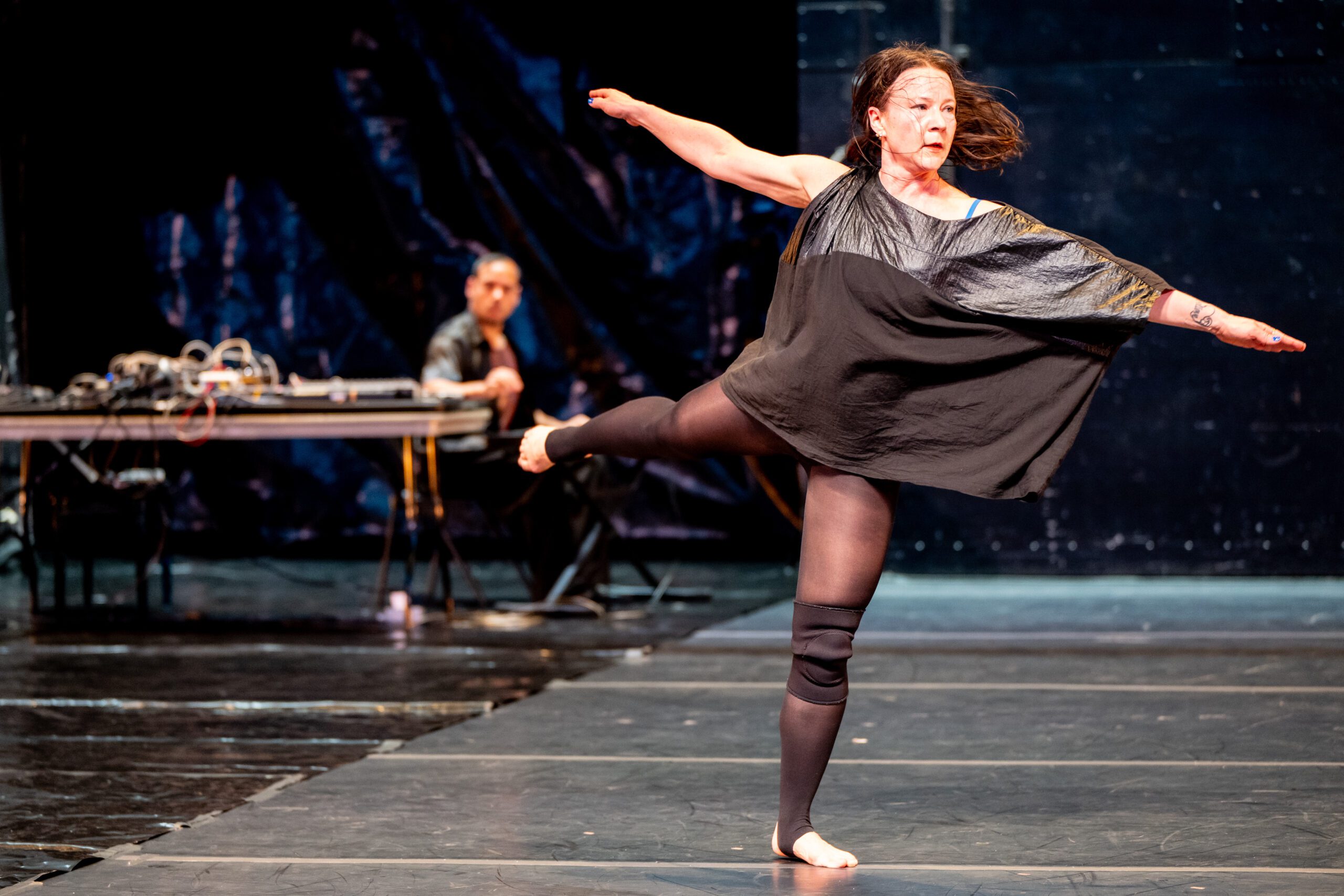
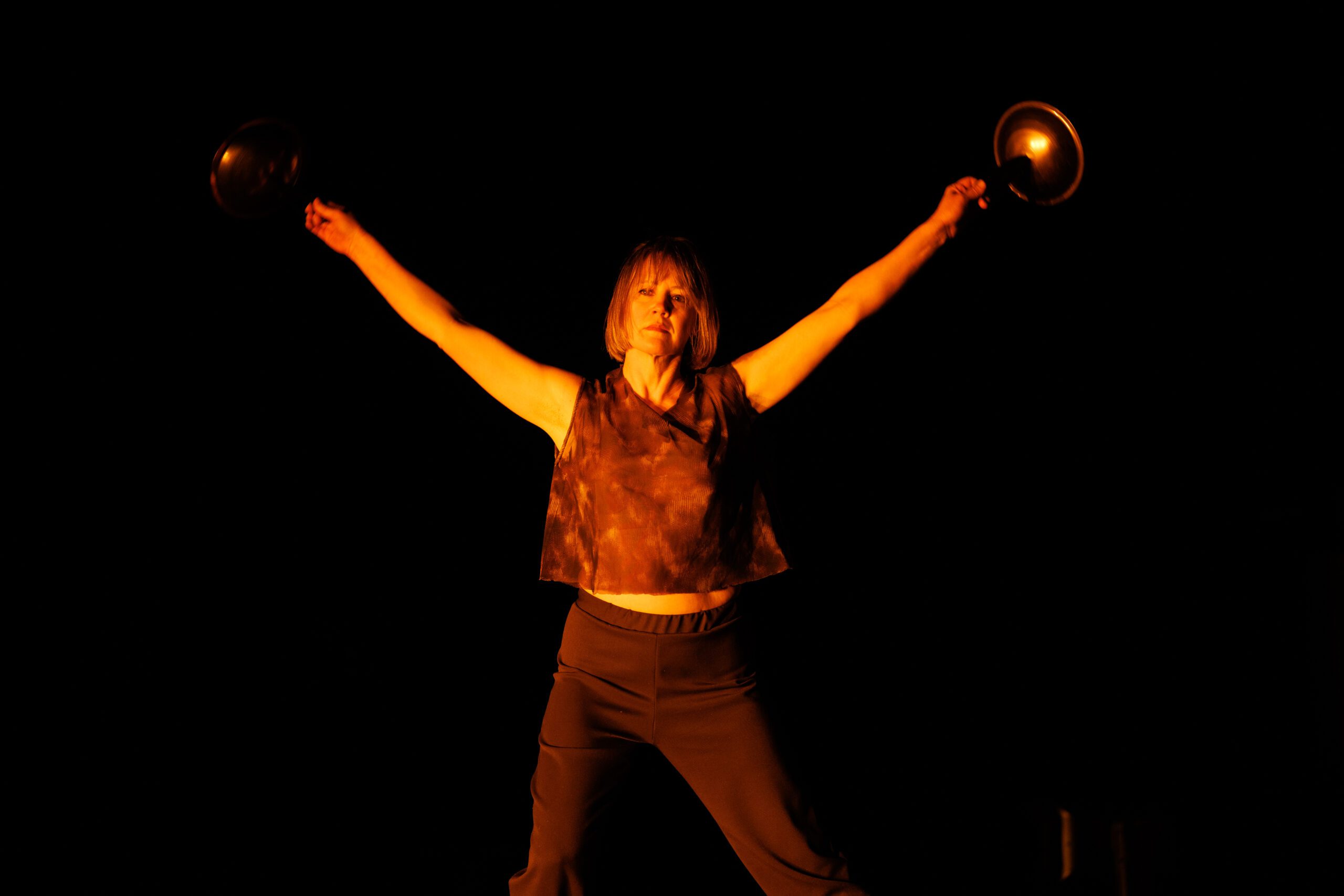
Get ready for a double bill of world premiers from two contemporary (and contemporaneous) choreographers with connections to New York.
Ivy Baldwin founded her eponymous company in 1999, while still an MFA student at NYU Tisch Dance. Learn more about the company here.
Jeanine Durning is from New York, holds a BFA from NYU Tisch Dance, and began making solo work in 1998. Learn more about her work here.
Read All About It: Jeanine Durning
Read All About It: Jeanine Durning
The Knowing is a Trap: A Conversation
“I think being creatively naive is very useful and opens up more possibilities.”
Review: Jeanine Durning’s ‘To Being,’ a Dance Premiere in Queens
“This marathon of a dance enmeshes the dancers so wholly in doing, doing, doing that you can’t imagine them being done.”
Jeanine Durning in Conversation with Lightsey Darst
“The funny thing about choreographers these days… is that it is a necessity to write well and if you don’t, you really can’t survive.”
Read All About It: Ivy Baldwin Dance
Read All About It: Ivy Baldwin Dance
Artists Reach Out: Ivy Baldwin
“I care most about being in a room together with other artists—experimenting, making, laughing, discussing, and then sharing these works with people who appreciate contemporary art.”
Review: Ivy Baldwin Dance’s Quarry at Manitoga
“Quarry feels deeply site-specific while remaining mysterious and a little unsettling.”
Her Longtime Dancer Died. Instead of Moving On, She Embraced Loss.
“It was too big and too traumatic to put aside and think about something else.”
Get Thee to the LIbrary
Get Thee to the LIbrary
Lucía Piquero Álvarez. Contemporary Dance Choreography and Spectatorship: Embodied Emotion. Palgrave Macmillan, 2024.
Shantel Ehrenberg, Kinaesthesia and Visual Self-Reflection in Contemporary Dance (2021).
Rudi Laermans, Moving Together: Making and Theorizing Contemporary Dance. Valiz/Antennae Series, 2015.
André Lepecki, Singularities: Dance in the Age of Performance. Routledge, 2016.
Leena Rouhiainen, Kirsi Heimonen, Rebecca Hilton, Chris Parkinson, editors, Writing Choreography: Textualities of and Beyond Dance. Routledge, 2024.
GET INTO IT
GET INTO IT


EXTRA CREDIT
EXTRA CREDIT
“Rumen” is the Latin term for the first, eponymous stomach compartment of ruminant animals – cattle, sheep, deer, goats, giraffes, camels, and llamas (although camels and llamas are controversial inclusions on this list, possessing merely 3 stomach chambers against the others’ 4). An etymology lesson from Merriam-Webster to think over – did you know that rumination is directly connected to bovine digestion?:
When you ruminate, you chew something over, either literally or figuratively. Literal rumination may seem a little gross to humans, but to cows, chewing your cud (partially digested food brought up from the stomach for another chew) is just a natural part of life. Figurative ruminating is much more palatable to humans; that kind of deep, meditative thought is often deemed quite a worthy activity. The verb ruminate has described metaphorical chewing over since the early 1500s and actual chewing since later that same century. Our English word comes from and shares the meanings of the Latin verb ruminari (“to chew the cud” or “muse upon”), which in turn comes from rumen, the Latin name for the first stomach compartment of ruminant animals (that is, creatures like cows that chew their cud).
Ruminant is synonymous with meditative, contemplative, and philosophical.
RELATED EVENTS
RELATED EVENTS

- Fri Apr 3 – Sat Apr 4, 2026
Ivy Baldwin Dance + Jeanine Durning: Rumen + Body Goes
- Dance
- Skirball Presents
- World Premiere