Coal Culture Today
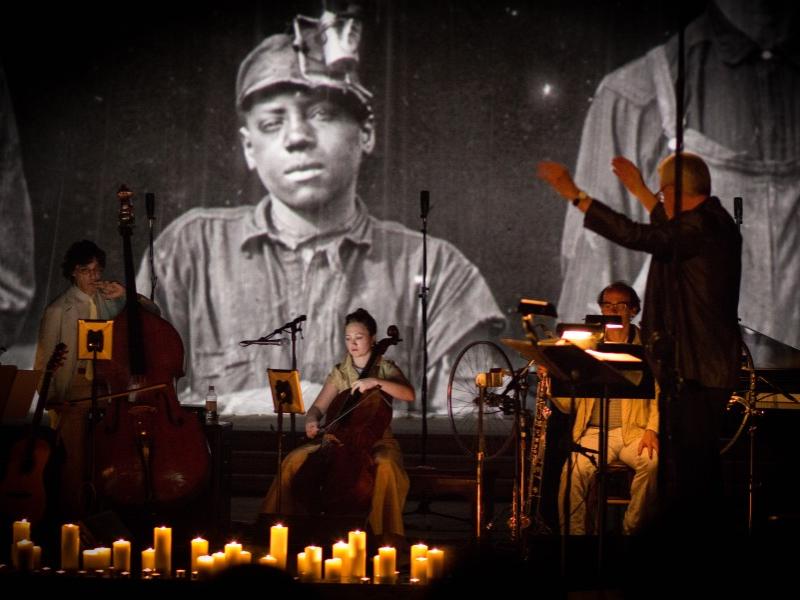
The upcoming performance of Julia Wolfe’s Anthracite Fields at NYU Skirball invites timely reflection on the cultural impact of coal. For many in the United States, coal seems like yesterday’s news. An early driver of industrialization, it is commonly associated with such 18th– and 19th-century innovations as steam engines and the railroad; late 19th– and early 20th-century labor struggles that achieved improvements to working conditions only to have heavy industry outsourced overseas; and the late 20th-century economic decline of coal regions that has led 21st-century politicians (especially our current president) to hold coalminers up as symbolic victims of past economic policies.
And yet coal is no thing of the past. According to the International Energy Agency’s latest World Energy Outlook, global demand for coal is at an all-time high, and it remains the world’s largest source of electrical power generation. Although coal demand is expected to fall by the end of this decade, coal’s heyday is now.
Climate change does not respect the borders that assign coal to other national economies. Coal consumption is contributing to the global warming that makes air conditioning one of the fastest-growing energy needs—a need which, at present, is primarily met by more coal. Affecting everything from architectural design and necessary social services to workplace fashion and preferred leisure activities, cooling is just one example of how coal shapes culture in ways that can be easily overlooked. Other examples include artworks that address the lives directed impacted by coal mining, including Anthracite Fields, and the study of such artworks in the academic field of environmental humanities.
In 2024, NYU launched a new undergraduate minor in Environmental Humanities (EH) that is housed in the Department of Environmental Studies. Under the rubric of NYU Environmental Humanities, an expanding network of EH faculty are collaborating on new projects and gathering regularly to share their research in this area. This fall, undergraduate students and I are exploring literary and cinematic engagements with coal in a new EH course called Energy Aesthetics: Coal, Oil, and Nuclear Novels and Films (cross-listed in Russian and Slavic Studies & Comparative Literature). In our course, we have already considered how coalmining propelled developments in the 19th-century novel, U.S. journalism, and documentary cinema. We eagerly await the chance to experience a musical response to coal on our planned class trip to Anthracite Fields.
Jillian Porter is Associate Professor of Russian and Slavic Studies & Comparative Literature and Faculty Adviser to the Minor in Environmental Humanities at NYU.
- Thu Oct 29
Julia Wolfe, Bang on a Can All-Stars & Trinity Choir: Anthracite Fields
The coal country sings.
- Oratorio
- Pulitzer Prize Winner