About
About
“What moves the body?”
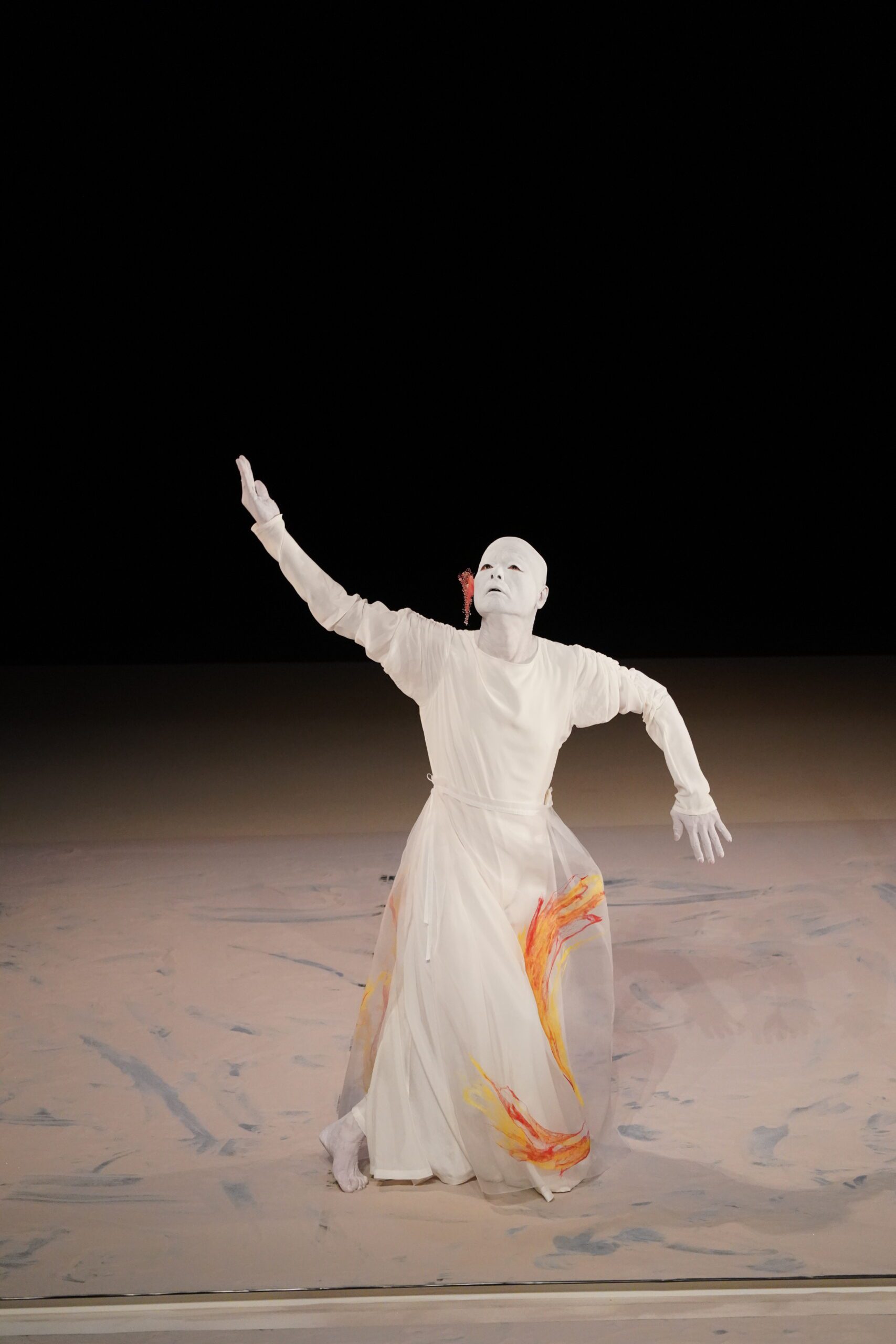
Sankai Juku company member Semimaru will lead a workshop, in advance of Sankai Juku’s performances at NYU Skirball (learn more about the show here).
What makes the body move? For the time being, why not move our bodies in a conditioned way and observe them.
The main objective of the workshop is to observe the connection between spirit and body. The workshop will focus on relaxation, tension, wave transmission, breathing, gravity, and rhythm. You can imagine that you can move your body consciously when you dance, but can you be conscious of your own body?
It is difficult to be aware of your own body. It appears that improvisational dancers do not build their dances with their thoughts. However, I don’t think it is true that they are not conscious of their bodies. Let’s think about the above by moving your own body.
Is a dancer who is standing still on stage not dancing? It may look like they are standing still, but in fact they are moving. There is a phrase, “not even a step up” which means that the dancer has already begun to move before he/she moves his/her feet. Is it the body that has begun to move? Is it the mind? Or is it you, the observer?
Sometimes we recognize a body in motion even though we are not consciously trying to move it. The situation of “recognizing and observing” a moving body away from one’s awareness is the body prompting awareness. Awakening awareness by moving the body is common in everyday life, so it is natural that it also occurs in dance.
Free and open to the public. Co-sponsored by NYU’s Center for Ballet & the Arts.
Date + Time
Date + Time
Location: Center for Ballet and the Arts Studio, 16 Cooper Square.
-
Monday Nov 25:30 PMWorkshop
Gallery
Gallery
Company
Company
Sankai Juku
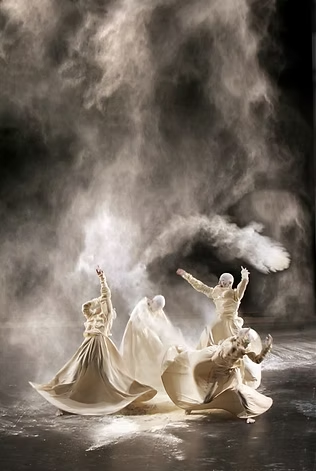
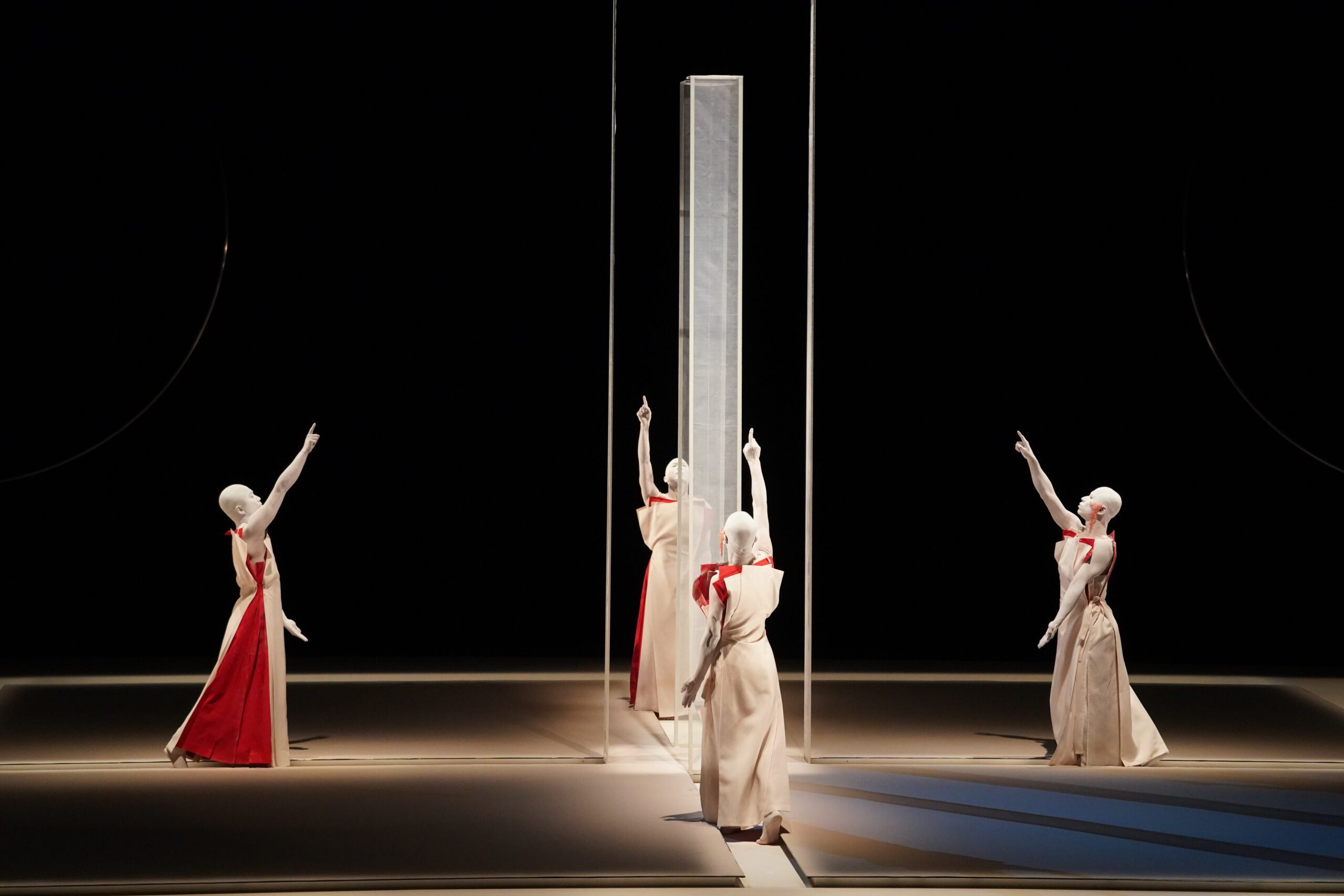
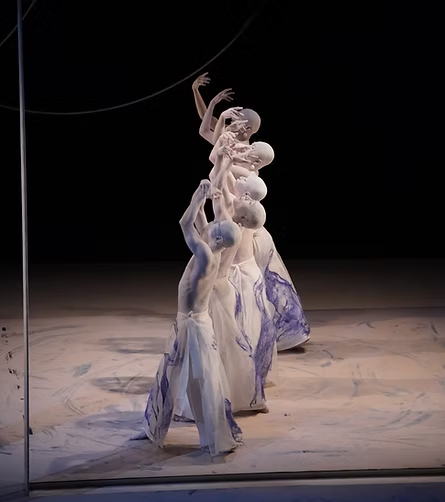
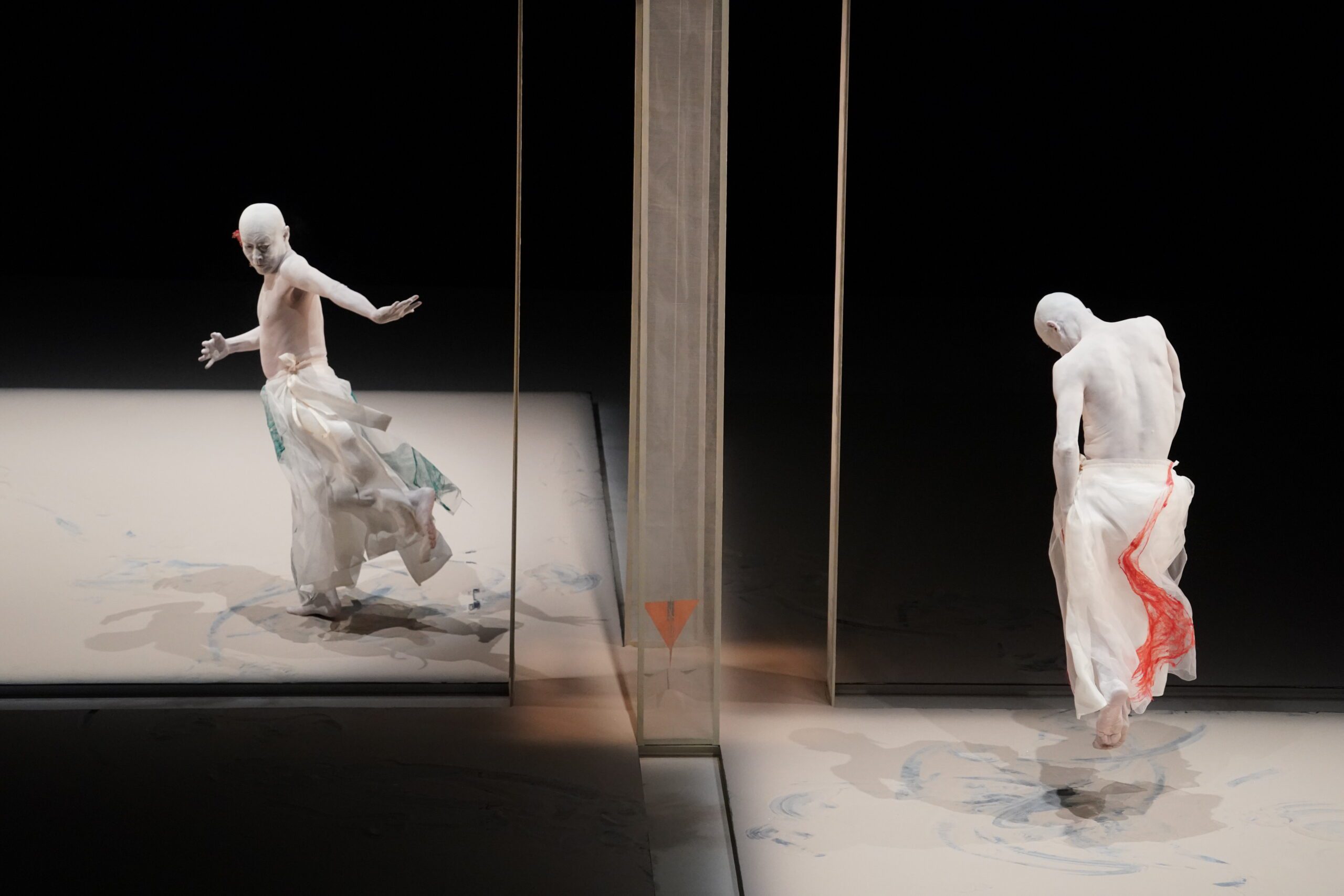
Ushio Amagatsu founded Sankai Juku in Tokyo in 1975 and developed a refined “second-generation” butoh that he described as a dialogue with gravity: synchronizing with it rather than escaping it. From 1980 onward, the company toured the world, becoming a fixture at the Théâtre de la Ville in Paris, which co-produced many of its works, and performing in more than forty countries. Amagatsu directed, choreographed, and designed each piece. TOTEM, his last, was completed shortly before his death in March 2024 and is danced by the company he shaped over the course of half a century.
Semimaru
A founding member of Sankai Juku, Semimaru has participated in all Sankai Juku activities
since its founding in 1975. In 1985, he began his solo career, often performing outside of the
theater. In 1990, he launched Kokutoin. The group continues to gather an unspecified
number of members for each performance and continues to create works. From 1987 to 1996,
he held dance workshops every summer at different locations in the form of training camps,
and since 1999 he has established an atelier in the Kurobe River basin in Toyama Prefecture,
where he holds training camps and performances every summer, and teaches younger
dancers. He generally performs outdoors and creates works that are appropriate to the
location, calling it “dialogue with the magnetic field,” and likes to observe the connection
between the space, the body, and the spirit.
Ushio Amagatsu
Ushio Amagatsu was born in Yokosuka, Japan in 1949 and founded Butoh company Sankai
Juku in 1975. He created Amagatsu Sho (1977), Kinkan Shonen (1978), and Sholiba (1979)
before the first world tour in 1980. Since 1981 (the year he created Bakki for Festival
d’Avignon), France and The Théâtre de la Ville, Paris have been his places for creation and
work. He has created 16 co-produced pieces with Théâtre de la Ville, Paris since 1982.
Amagatsu also works independently outside Sankai Juku. In 1988 he created “Fushi” at the
invitation of the Jacob’s Pillow Foundation in the US, with music by Philip Glass. In 1989, he
was appointed Artistic Director of the Spiral Hall in Tokyo, where he directed “Apocalypse”
(1989) and “Fifth-V” (1990).
In February 1997, he directed the opera “Bluebeard’s Castle” by Bartok, conducted by Peter
Eötvos, at the Tokyo International Forum. In March 1998, at Opéra National de Lyon, France,
he directed Peter Eötvos’s opera “Three Sisters” (world premiere), which received “Prix du
Syndicat National de la Critique, France.” “Three Sisters” was seen in the 2001-2002 season
at Théâtre du Chatelet in Paris, at Théâtre Royal de la Monnaie in Brussels, at Opéra National
de Lyon, and at Wiener Festwochen 2002 in Austria.
In March 2008, Amagatsu directed “Lady Sarashina,” Peter Eötvos’s new opera at Opéra
National de Lyon (world premiere). “Lady Sarashina” again received “Prix du Syndicat
National de la Critique, France” and was seen at Opera Comique in February 2009 and at
Teatr Wielki, Polish National Opera, in Warsaw in April 2013.
Amagatsu has presided on the jury of the International Choreographic Competition of the
National Academy of Dance, Italy (2011), the jury of the Toyota Choreography award (2002
– 2005) and the jury of the International Meeting of Dance of Bagnolet (1992).
Awards and merits given include: Commandeur de l’ordre des Arts et des Lettres by the
French Cultural Ministry (2014), the Purple-Ribbon Medal by the Japanese government
(2011), the Geijyutsu Sensho Prize (Art Encouragement Prize) from the Minister of Education,
Culture, Sports, Science, and Technology (2004), and the Chevalier de l’ordre des Arts et
des Letters by French Cultural Ministry (1992). “HIBIKI” received a Laurence Olivier Award
in category of Best New Dance Production (2002).
Books include “Ushio Amagatsu, Des rivages d’enfance au bûto de Sankai Juku” (biographydictated by Kyoko Iwaki, Actes Sud, 2013, France) and “Dialogue avec la gravité” (published
by Actes Sud, 2000, France and Iwanami Shoten, 2015, Japan).
Support
Support
Co-sponsored by NYU’s Center for Ballet & the Arts.