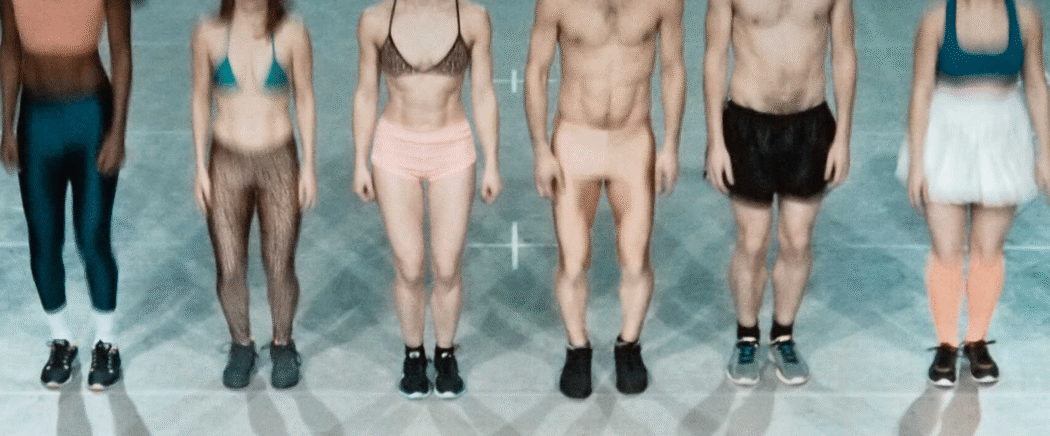
In the midst of the Olympic season I’m reminded of how witnessing acts of extreme athleticism can distance an audience from the performer — elevating the athlete to super-human status. How can individuals flying across ice-covered terrain be like us, grounded down here in our quotidian bodies? We hear of their physical sacrifices and the unbelievable time commitment required to become great. Indeed, in movement science, expertise demands massive practice — not only to build strength and endurance, but to refine the continuous coupling of mind, body, and environment.
Movement science research describes motor activity — whether grasping a coffee cup or skiing slalom — as inhabiting a continuum from movement intention to overt action, and then to the parsing of sensory and environmental consequences as the act unfolds. Was the cup fuller than you thought, hotter, more slick? Did you clip the gate and need to adjust for the next run? Remarkably, this sensorimotor coupling is not confined to the moving body itself.
We have rich evidence that observing another’s body in motion activates neural regions as if we ourselves were performing the movement. The implications of this phenomenon are powerful. Observing others in action allows us to practice kinesthetic empathy: I see myself in your body; the consequences of your actions also occur to me. In rehabilitation literature, observing (and even imagining) movement can help rewrite our body concept when it is distorted by injury, and has demonstrated facilitatory effects on muscle strength and endurance during recovery. Simply put, the body and brain are inseparable collaborators that construct our embodied self in the context of physical environment and human community.
Witnesses to Jan Martens’ The Dog Days Are Over 2.0 encounter extreme physical engagement not only as spectacle, but as embodied transmission. Through watching this dance, we find ourselves in awe of super-human athletes while simultaneously becoming them through kinesthetic empathy — compressing the distance between performer and audience through the singular immediacy of live performance.
Elizabeth Coker is Assistant Arts Professor of Dance at NYU Tisch School of the Arts.