Druid Theatre staging Sean O’Casey’s Dublin Trilogy – directed by Tony Award-winner Garry Hynes, and marking the 100 anniversary of the first play in the cycle, The Shadow of a Gunman – is an exponentially exciting event. Either Druid or O’Casey would be incredible to have on the NYU Skirball stage, and so the confluence of both in the form of DruidO’Casey will be a monumental experience. Get ready for this marathon trilogy with some insight into both Sean O’Casey as a playwright and Druid as a company.

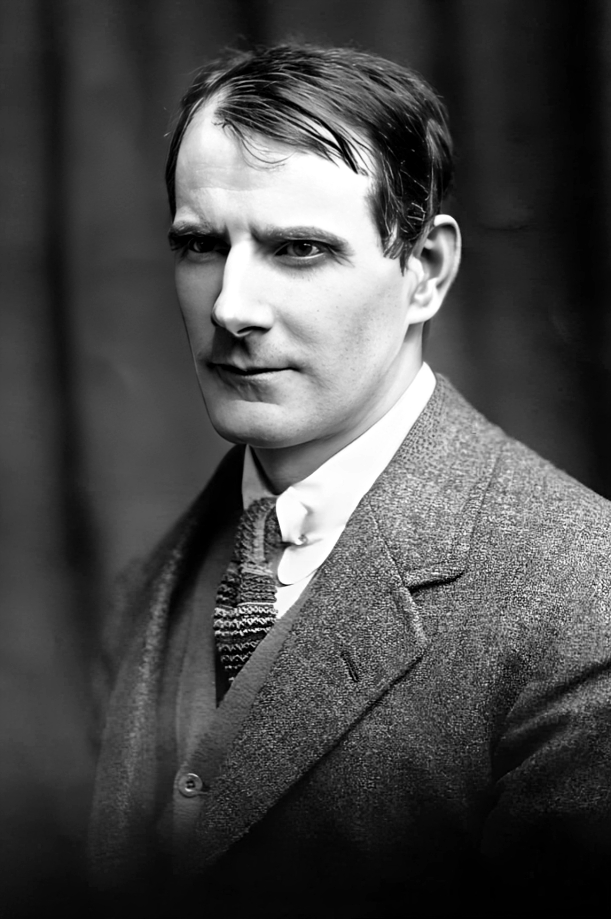
Sean O’Casey (1880-1964) is a renowned Irish playwright who brought the Irish working class to the popular stage, grounding his work in the real political and social upheavals of the time. A 1959 New Yorker review extols O’Casey’s genius: “A masterpiece is a work to which nothing can be added without redundancy and from which nothing can be taken away without loss. In this category Sean O’Casey’s Juno and the Paycock securely belongs.” Read a brief bio of O’Casey – and some context on the premier, and subsequent riots, of The Plough and the Stars – via Yale’s Modernism Lab.

Druid was founded in 1975 in Dublin, and now tours internationally –  “anchored in the West of Ireland and looking to the world.” Learn more about the company, their past and current works, cultural programs, and more.
Office Hours: Coming Soon

Get Into It

Druid Theatre staging Sean O’Casey’s Dublin Trilogy – directed by Tony Award-winner Garry Hynes, and marking the 100 anniversary of the first play in the cycle, The Shadow of a Gunman – is an exponentially exciting event. Either Druid or O’Casey would be incredible to have on the NYU Skirball stage, and so the confluence of both in the form of DruidO’Casey will be a monumental experience. Get ready for this marathon trilogy with some insight into both Sean O’Casey as a playwright and Druid as a company.

Sean O’Casey (1880-1964) is a renowned Irish playwright who brought the Irish working class to the popular stage, grounding his work in the real political and social upheavals of the time. A 1959 New Yorker review extols O’Casey’s genius: “A masterpiece is a work to which nothing can be added without redundancy and from which nothing can be taken away without loss. In this category Sean O’Casey’s Juno and the Paycock securely belongs.” Read a brief bio of O’Casey – and some context on the premier, and subsequent riots, of The Plough and the Stars – via Yale’s Modernism Lab.

Druid was founded in 1975 in Dublin, and now tours internationally –  “anchored in the West of Ireland and looking to the world.” Learn more about the company, their past and current works, cultural programs, and more.
Get Thee to the LIbrary

Recommended readings to get you in gear for the show.

Susan Cannon Harris, Irish Drama and the Other Revolutions: Playwrights, Sexual Politics and the International Left, 1892-1964. Edinburgh University Press, 2022. 

James Moran, The Theatre of Sean O’Casey. Methuen Drama, 2013.

Christopher Murray, Sean O’Casey: Writer at Work: A Biography. McGill-Queen’s University Press, 2004.

Fintan O’Toole, Critical Moments: Fintan O’Toole on Modern Irish Theatre. Carysfort Press, 2003.

Anthony Roche, The Irish Dramatic Revival, 1899-1939. Bloomsbury, 2015.

Read All About It

Culture Matters | Apr 1, 2023

Sean O’Casey: The Shadow of a Gunman

O’Casey did not turn to playwriting until he was nearly 40 years old, around 1920. Prior to that, he had participated in national and class struggles for two decades as a champion of Irish-language culture, a militant trade unionist, and a socialist activist.

Howlround | Feb 10, 2017

A conversation with director Garry Hynes

“I think every act of theatre is political, and should be. It’s a civic action; it’s a group of people in a live situation, in a room together, doing something. Is theatre a way of response to what is happening around us? Absolutely yes, and if it isn’t, why are we doing it, why are we bothering?”

The Guardian | July 30, 2023

DruidO’Casey review

The experience is revelatory. O’Casey grew up in working-class Dublin, and his portrayal, here, of life in the city’s tenements during the years of conflict between 1915 and 1922 becomes an expression of the wider world, its yesterdays, todays and tomorrows.

From the Vault

Press from O’Casey’s lifetime, and contextualizing the Dublin Trilogy in different historical moments (including the audience riots at the premier of The Plough and the Stars).

Sean_O'Casey,_circa_1910s_(retouched)
Washington Post | June 1988

Sean O'Casey: The Playwright and the Stars

The Dublin Plays of Sean O’Casey, products of the Irish troubles of the first two decades of this century, continue to have an immediate and wrenching relevance because of the crescendo of political murders in the North of Ireland for the past 20 years.

Commentary | Feb 1955

Review: Sunset and Evening Star, A Memoir by Sean O’Casey

In the last line of Sunset and Evening Star, Sean O’Casey offers a toast to life—rather to Life, for he has been capitalizing that word since he first started to write plays in Dublin more than thirty years ago.

Extra Credit

If you find yourself longing to spend more time with O’Casey after these marathon performances, follow that interest into the archives. O’Casey’s papers are held in libraries and archives all over the US, Ireland and the UK – including decades of correspondence from O’Casey to NYU Professor David H. Greene at NYU’s Fales Library and Special Collections, and a collection of papers at the New York Public Library.

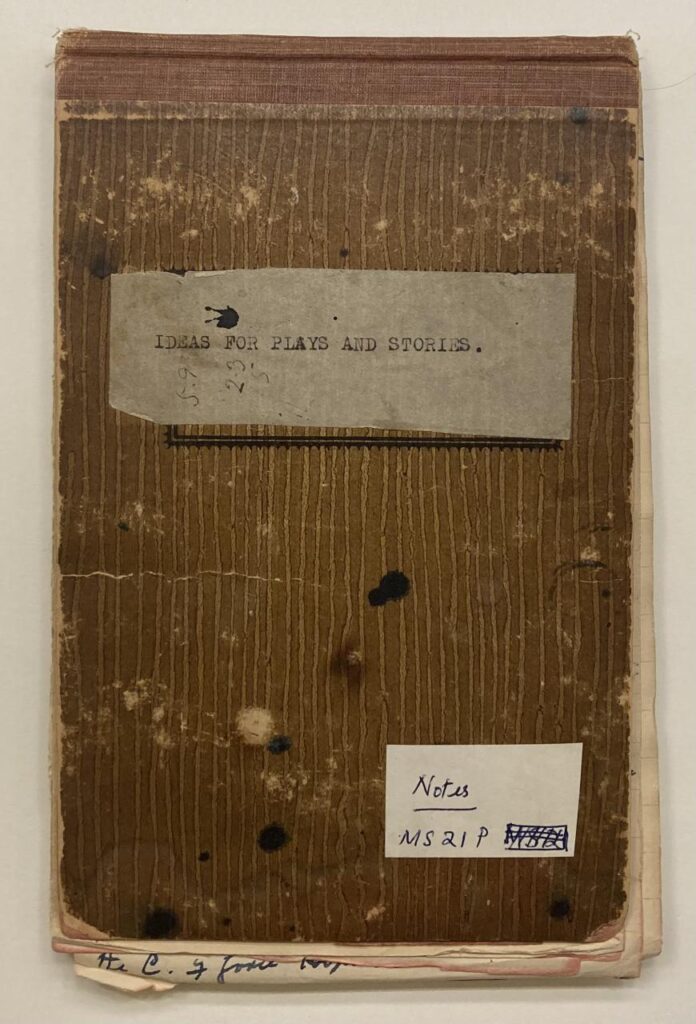
This notebook, labeled “Ideas for Plays and Stories,” was featured as part of a 1977 NYPL exhibit “Self-Explorations: Diarists in England and America” – along with diaries and notebooks from Virginia Woolf, Charles Dickens and George Eliot.

O’Casey’s own home library was cataloged relatively recently by the National Library of Ireland – read this first-hand account from a student who worked on the project, including a tour through some notable titles and ephemera.